Everyday I murder the Spanish language a little less and I feel better about this illusion that I have, that some day I might actually become fluent or bilingual (although I am finding that the definitions of such words are in the midst of debate). Either way, I just want to be able to express feelings, complete and correct thoughts, as well as some common jokes. Then I might be happy.
And today I got a little closer to that goal.
I had a conversation with a coworker today about Mercedes Sosa, a brilliant vocalist who has this song called Todo Cambia, and it simply makes me melt.
The fact that I can talk about such beautiful music at least a little bit, and have the person across from me understand what I am saying, and also understand how much I truly enjoy the song, makes me wonder, and actually believe that I am progressing just fine.
Meanwhile, back at the ranch...when someone calls, I still can’t understand what the Hell they are saying to me on the other end of the line, and so our conversation goes a little bit like this...
Them: "Blah, blah blah (a word I understand) blah, blah"
Meg: "Oh si?"
Them: "Blah, blah (oh, another good word), blah"
Meg: "Oh, gracias...adios"
Please note: In real life, things aren’t that bad. I get along just fine, but just imagine speaking a foreign language over the phone. A lot more depends on expressions than you think. I’ve learned that the hard way from language assessments over the phone. Some really smart people in some really important offices call me, blab about stuff in Spanish...I attempt to answer them...the interview is over...I feel like crap. Trust me, it’s a dumb idea and experience you don’t really want in life.
So to sum up, my progress with the Spanish language is getting better and I’m just glad I’m not trying to learn Swahili, because that seems more difficult. But somewhere in my head I’ve decided I want to learn Portuguese and French too (languages of the developing world), but I really have to slow down on these thoughts because I still have to master Spanish.
Monday, November 14, 2005


Sunday, November 13, 2005
Romero and the Jesuit Martyrs
 (complemts of Google Images)
Every time I walk past the UCA (the Jesuit University here) I can’t help but think that people were murdered there. I came to El Salvador knowing a bit of history and a very specific history of the Jesuits here, and yet it was my own apprehensive heart that prevented me from really knowing the place that the six Jesuits and two women were killed in 1989. I didn’t want to visit until I was ready.
Well, Friday began with a bang! I accompanied a coworker and a friend to the Hospital of Divine Providence, the place where Oscar Romero lived and was murdered. Another place I was avoiding out of fear....
So as the story goes, Romero was made the Archbishop of El Salvador in the mid 1970's. He was appointed as a person who would not make a lot of changes and maintain the status quo. In the beginning, Romero was a friend of the rich, and they thought they were supporting someone "safe". But as history took its course, Romero also evolved. Through his relationship with Rutillo Grande (now a Jesuit Martyr), Romero learned about the reality of the poor of his country, and he was forced to live life with his eyes wide open. In time, Romero became the true man of God that he is known for today. He became a man of the poor and began speaking out against the oppression of the rich and the government. His sermons were prolific and prophetic, and like Dr. King, he knew his words had consequences.
While saying mass at the hospital chapel (a hospital for those with terminal cancer), Romero was assassinated by a man who was later linked to the School of the Americas. A week later, Romero’s funeral was packed with Salvadorans flowing out into the park. The government used the opportunity to open fire on the crowd, killing the defenseless mourners.
Today, Romero is the Salvadoran Saint. Although Rome will probably never canonize him for political reasons, Salvadorans have already given him sainthood status. He is there national hero and a beacon of light. And in some ways, because he is a martyr, his message has been heard by even more people. On behalf of the government, killing Romero was probably one of the worse moves they ever made!
I visited his humble home on Friday as well as the very spot his body fell when the bullets hit him. I saw the bloodstained clothing he was wearing and his limited personal possessions that proved his commitment to live in solidarity with the poor.
It was an intense experience to say the least, and in a way, I felt closer to the Salvadoran people by getting a closer glimpse of a person they admire so greatly.
By Saturday, I woke up and decided to take the morning off, knowing the evening was going to be filled with more intensity. By three in the afternoon, I waltzed down to the UCA so join the festivities of the 16th Anniversary of the Jesuit Martyrs.
The first thing I saw on the campus were the unusual amount of gringos. They come here in delegations for the event...to learn more about liberation theology...and experience the certain mysticism that martyrs bring. But besides the gringos, I saw beautiful alfombras (rugs made of sand). Groups of students at the UCA get together and interpret the reality of El Salvador through artistic expression. They spend tedious hours on this one large rectangular space that will later be photographed and destroyed. Simply amazing pieces of artwork, and onetime occurrence.
By the time we had seen the alfombras, it was time to finally go to The Romero Center and see the Rose Garden, the place were the Jesuits were found. They have a little museum off to the side with personal effects from the Jesuits as well as the other Latin American Martyrs including the Maryknoll church women, James Carney and Rutillo Grande, to name a few. One of my favorite memories about that experience was walking next to a campasino man as we went through the museum and when we got to the El Mozote display, he tapped me on my arm to show me all the bullets they found in the mass graves. I looked into his eyes at that moment, and I could see a certain sadness of collective pain he has faced throughout his long life in El Salvador. And the thought did cross my mind, "was he from the area of El Mozote?"
After the museum, I went to the Rose Garden and just stood there for a few minutes. I couldn’t help but visualize the last moments of the Jesuits and two women. The horror of finding soldiers in your yard...hearing gunshots in close proximity and knowing they are coming to you next...wondering if there is a way to escape...saying a last minute prayer before death. Today there are rose plants in the space where some of the Jesuits were found. Besides contemplating the cycle of life to death and the symbolism of death, the site itself has a certain calm intensity....
After that experience we decided to get some good fresh juice and take it easy before the vigil. We saw some friends, went to the chapel to see the stations of the cross art by Roberto Huezo (a really talented Salvadoran artist).
By 6pm the vigil started and also welcomed thousands of people. The was an interpretive dance that kicked off the vigil and I couldn’t help but cry (I’m one of those closet emotional folks...connected to everything and everyone but you can never really tell). They danced to this song that I hear often here, and that I like a lot, but this time I really listened to the lyrics and reflected.
Translation of the refrain: "Changes...there are many Changes..."
I couldn’t help but think of the cycle of changes here in El Salvador. A brutal history of murder and corruption marked with committed, loving people who don’t give up. The poor who fight every damn day for ever ounce of dignity. The United States who parades their wealth here and flaunts their level of power by influencing government policies like its their job. The Salvadorans that I know, who have such a deep and sad history of love and loss, of assassinations and struggles. And I think "cambios, muchos cambios..."
I wonder if anything really does change here...the acuerdos de paz that are for shit...the US presence that make me want to denounce where I am from...the Salvadorans who always talk about the past for fear it will happen again, so that we may never forget. How could you not get caught up in that experience.....
So after my little moment, I joined some friends, including my house mother when I first came to Salvador (she took such good care of me). It was really a special experience walking through the vigil with her because it is her history that she shared with me that I think of every day now.
I think of her three daughters who are my age and now live in San Francisco. I think of how her brother was a member of the guerrillas, trained in Cuba and killed here in El Salvador (17 years old). I think of the 1986 earthquake that took her house as she had to care for her three girls alone, without a husband. The trauma of dealing with the aftermath of the disaster and the war with her children. Her connection to the people of her country and her commitment to her faith. I remember her story of how she was there in the park at Romero’s funeral when they opened fire. It’s all these stories and more that I remember every time I hear a song...or hug her...and so walking next to her in this vigil was really important (and unplanned).
But let me tell you, this vigil was huge...thousands of people with individual histories and a real feeling of understanding and solidarity. It wasn’t particularly somber, but I think it is part of the historical mourning that is taking place here.
After the vigil, was the mass. And all I really want to say about that was that the sermon was really rockin. Whoever the guy was, he was really right on. He really got to the core of the reality here. From the long standing poverty, to the government corruption, the unequal distribution of wealth, the collective sins brought on by violence and the ever present "natural disasters" that he also believes aren’t quite so NATURAL. I really found myself hanging onto his every word, really glad I believed in the same God he did...really glad he was representing Catholicism...the Catholicism that I know and Love.
At any rate, after mass, was an interval documentary and a solidarity concert. There is really something awesome in this world when you can sing some really great music that has such a powerful message that people connect with. Music can move mountains man, and when you think of the power of music and media here, your thoughts can really go somewhere.
So that’s how I ended my night. I sang Casas de Carton as I lulled myself to sleep, and found myself thanking God for another really great Salvadoran day. And these are the moments that remind me that this could be the rest of my life....
On a side note: Bought some swell music and a T-shirt with Romero, Che and Marti on it. The shirt is so intriguing that I couldn’t help but buy it in the hopes that it would create future conversation. I’m not so convinced that these three men had the same ideals, but I do see some of the similarities and their differences are what makes the shirt interesting!
A Letter from Dad
I recently received a letter from my father after a rather heated discussion about faith and religion over the phone. My father and I are both very passionate people, committed to the ideals that we believe in, and matters of such great depth evoke a certain emotional response.
My father is a compassionate and humble man, and this is what he wrote to me.
Dear Meg-
The church is certainly in turmoil, but no more so than many hundreds of times throughout history. In the fourteenth century there were actually two popes and people were forced to choose or be persecuted or killed. People of wisdom and courage did not choose but rather set their sights on the true leader of the church, our Lord and Savior.
Any Catholic with a brain struggles with his or her faith. All good people struggle with their faith. It is part of being alive. It matters not that we fall but rather that we once again stand, take a step and continue to struggle forward.
People in the church that persecute the faithful for their sexual orientation believe that they are in power. But rather, we are the church and our Lord is in power.
Do not allow people to have power over you. We people of faith will stand up against this injustice. It will not last, our Lord will have His way.
I Love you Megan and I have faith that you will continue to struggle as long as you live. I have Faith in you and I believe in you. And I pray for you.
Enjoy each day
Cherish each day
and I miss you
With My Love,
Dad
PS. I heard about Sister Jennine Grammick. Her ministry to Gay and Lesbian Catholics, helping to bring them back to the church. I saw her show on PBS but I do not have info on her. It was a beautiful piece on Sister Grammick "In Good Conscience" a documentary. I did not see the documentary but rather a small piece on her work on the PBS show "In The Life".
You know, my Dad is a very good man, and reading his letter reminded me how important the struggle is...and so, I am still here!
My father is a compassionate and humble man, and this is what he wrote to me.
Dear Meg-
The church is certainly in turmoil, but no more so than many hundreds of times throughout history. In the fourteenth century there were actually two popes and people were forced to choose or be persecuted or killed. People of wisdom and courage did not choose but rather set their sights on the true leader of the church, our Lord and Savior.
Any Catholic with a brain struggles with his or her faith. All good people struggle with their faith. It is part of being alive. It matters not that we fall but rather that we once again stand, take a step and continue to struggle forward.
People in the church that persecute the faithful for their sexual orientation believe that they are in power. But rather, we are the church and our Lord is in power.
Do not allow people to have power over you. We people of faith will stand up against this injustice. It will not last, our Lord will have His way.
I Love you Megan and I have faith that you will continue to struggle as long as you live. I have Faith in you and I believe in you. And I pray for you.
Enjoy each day
Cherish each day
and I miss you
With My Love,
Dad
PS. I heard about Sister Jennine Grammick. Her ministry to Gay and Lesbian Catholics, helping to bring them back to the church. I saw her show on PBS but I do not have info on her. It was a beautiful piece on Sister Grammick "In Good Conscience" a documentary. I did not see the documentary but rather a small piece on her work on the PBS show "In The Life".
You know, my Dad is a very good man, and reading his letter reminded me how important the struggle is...and so, I am still here!
Tuesday, November 08, 2005
A Sticky Situation
In El Salvador, having a plan is really not the best way to conduct life, at least not in my opinion. It has been my experience that in this "mas o menos" culture, a lot changes in a short period of time. And with that, even time is sort of relative anyway. Plus, there are just those days when you have to change everything you wanted to do, abandon ship and get the heck out!
Case and Point:
Yesterday, was a Monday, one of those Manic Mondays they call it. I decided to sleep in (until 7:15am) and got up to do some work on the website I was putting together. Usually I read the news in the morning, but I was pretty consumed with what I wanted to do, so I skipped the news and said I would read it later (mistake numero 1).
I did my thing on the website and then went to meet my friend so that we could have some lunch and then go to a museum about the history of the war here.
So I met my friend around 12:15pm and we went to get lunch. The comedor was packed and so we had to get food to go, and we at it in the park (which is sketchy at night). Then we board a bus and go to the museum that she says is open ALL day (at least that’s what they say). Well, as it turns out, the museum is closed until 2pm. Operation: Change Plans!
We decided to go to the Cathedral in the center of the city. This is where Romero’s body is and there’s a lot of life downtown too. Plus, I have to meet another friend there later in the day, so it sort of worked out perfectly for me.
We hop a bus and off we go to El Centro (a sketchy area, but part of the Salvadoran experience). When we get to the Cathedral, we hop out and there is a whole mess of people in the park (more than usual). Across the street, at the Cathedral, the doors are closed (they are open during the day for free flowing traffic) and the gates are plastered with "Anti-Articulo 103" posters.
I say to myself, "this looks like a protest!" Then I survey the scene a little more.
Most of the people in the park are men, and some groups of them are starting to get energized, and there are men in the bell tower with masks. I think again, "this is probably not the best situation to be in."
So I get out my little book that has phone numbers to call my other friend to tell her to meet at another place. While I thumb through the book, a police officer comes up to us (not my favorite group of people) and he asks in plain English what we are doing there.
I respond in Spanish that we were going to see Romero but the Cathedral is closed and so I was going to call a friend and we were going to hop on a bus again. He continues to speak in English and says that we need to leave now, that the situation is very dangerous. According to him, gang members took over the church because they want "their rights, or something like that." He also includes that they are not suppose to be protesting.
I thank him for the heads up and that we are leaving as soon as I alert my friend. He says that’s a good idea!
Well the phone card doesn’t work, and right about that time there was a loud noise and people started to flock to the other side of the park....our cue to leave. We hop a bus back to where we came from.
I get back to work and try to call my friend, but have to wait for my coworker to call a bunch of people first. Life is all about patience here. I try and try to get through, but I can’t
Plan B: I talk to Luis and ask him what to do about my meeting with my other friends back in the hot zone. He says, "I have experience with these sorts of things. "By the time you get back, the people will have left."
It doesn’t seem to me that Salvadorans are the type to give up so quickly, but I took his word for it because he IS a Salvadoran and he "has experience".
So I hop back on the same bus and head to the Cathedral. When I got there, the mob was also still there, and my friends, gringos like sitting ducks on the side of the street.
I said, "Dude, we’ve got to get the hell out of here!"
Five minutes later, we start walking. Process is always slow with a group of people (especially people caught in the moment). We walk a bunch of blocks away from all the action to the place where I later bought my new guitar (I am starting lessons).
We made it in once piece!
The Reality:
There is a maximum security prison in Zacateculuca that is affectionately known as "Zalcatraz". This prison houses criminals from the gang Mara Salvatrucha (many of the members once lived in the US and have been deported back due to crimes committed).
The people in the park protesting were members of a group called COFAPES (family members of the incarcerated) as well as other gang members. They were protesting Article 103 which was bringing about reforms at the prison around visitation rights.
The protesters were denouncing the really horrible conditions of the prison as human rights violations (the facilities really stink and people are really packed in there ie overcrowding.) and they wanted some changes.
Now human rights groups are trying to work with them and settle this matter in a peaceful way. The president of El Salvador said "they do not have any justification." So there you go! I haven’t heard anymore lately, except that the Cathedral is still being occupied. But that’s the story in a nutshell.
My opinion:
I really have no opinion on the situation, except that I can see where the people are coming from. I am a bit disturbed that the media is portraying the protesters as a bunch of gang members (as if gang members shouldn’t have rights...plus, there was a lot of family there too).
At any rate, I had a different experience I guess you would say and I am alive! What are ya gonna do?
For further reading about the prison situation, check out these links
CRISPAZ
LA Times
Case and Point:
Yesterday, was a Monday, one of those Manic Mondays they call it. I decided to sleep in (until 7:15am) and got up to do some work on the website I was putting together. Usually I read the news in the morning, but I was pretty consumed with what I wanted to do, so I skipped the news and said I would read it later (mistake numero 1).
I did my thing on the website and then went to meet my friend so that we could have some lunch and then go to a museum about the history of the war here.
So I met my friend around 12:15pm and we went to get lunch. The comedor was packed and so we had to get food to go, and we at it in the park (which is sketchy at night). Then we board a bus and go to the museum that she says is open ALL day (at least that’s what they say). Well, as it turns out, the museum is closed until 2pm. Operation: Change Plans!
We decided to go to the Cathedral in the center of the city. This is where Romero’s body is and there’s a lot of life downtown too. Plus, I have to meet another friend there later in the day, so it sort of worked out perfectly for me.
We hop a bus and off we go to El Centro (a sketchy area, but part of the Salvadoran experience). When we get to the Cathedral, we hop out and there is a whole mess of people in the park (more than usual). Across the street, at the Cathedral, the doors are closed (they are open during the day for free flowing traffic) and the gates are plastered with "Anti-Articulo 103" posters.
I say to myself, "this looks like a protest!" Then I survey the scene a little more.
Most of the people in the park are men, and some groups of them are starting to get energized, and there are men in the bell tower with masks. I think again, "this is probably not the best situation to be in."
So I get out my little book that has phone numbers to call my other friend to tell her to meet at another place. While I thumb through the book, a police officer comes up to us (not my favorite group of people) and he asks in plain English what we are doing there.
I respond in Spanish that we were going to see Romero but the Cathedral is closed and so I was going to call a friend and we were going to hop on a bus again. He continues to speak in English and says that we need to leave now, that the situation is very dangerous. According to him, gang members took over the church because they want "their rights, or something like that." He also includes that they are not suppose to be protesting.
I thank him for the heads up and that we are leaving as soon as I alert my friend. He says that’s a good idea!
Well the phone card doesn’t work, and right about that time there was a loud noise and people started to flock to the other side of the park....our cue to leave. We hop a bus back to where we came from.
I get back to work and try to call my friend, but have to wait for my coworker to call a bunch of people first. Life is all about patience here. I try and try to get through, but I can’t
Plan B: I talk to Luis and ask him what to do about my meeting with my other friends back in the hot zone. He says, "I have experience with these sorts of things. "By the time you get back, the people will have left."
It doesn’t seem to me that Salvadorans are the type to give up so quickly, but I took his word for it because he IS a Salvadoran and he "has experience".
So I hop back on the same bus and head to the Cathedral. When I got there, the mob was also still there, and my friends, gringos like sitting ducks on the side of the street.
I said, "Dude, we’ve got to get the hell out of here!"
Five minutes later, we start walking. Process is always slow with a group of people (especially people caught in the moment). We walk a bunch of blocks away from all the action to the place where I later bought my new guitar (I am starting lessons).
We made it in once piece!
The Reality:
There is a maximum security prison in Zacateculuca that is affectionately known as "Zalcatraz". This prison houses criminals from the gang Mara Salvatrucha (many of the members once lived in the US and have been deported back due to crimes committed).
The people in the park protesting were members of a group called COFAPES (family members of the incarcerated) as well as other gang members. They were protesting Article 103 which was bringing about reforms at the prison around visitation rights.
The protesters were denouncing the really horrible conditions of the prison as human rights violations (the facilities really stink and people are really packed in there ie overcrowding.) and they wanted some changes.
Now human rights groups are trying to work with them and settle this matter in a peaceful way. The president of El Salvador said "they do not have any justification." So there you go! I haven’t heard anymore lately, except that the Cathedral is still being occupied. But that’s the story in a nutshell.
My opinion:
I really have no opinion on the situation, except that I can see where the people are coming from. I am a bit disturbed that the media is portraying the protesters as a bunch of gang members (as if gang members shouldn’t have rights...plus, there was a lot of family there too).
At any rate, I had a different experience I guess you would say and I am alive! What are ya gonna do?
For further reading about the prison situation, check out these links
CRISPAZ
LA Times
Sunday, November 06, 2005
A Special Day
(Google Images)
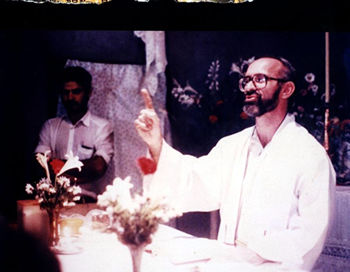
Today was a really special day because I got a really different view of la realidad. Fr. Dean invited us to go with him to the Ignacio Martin Baro Cooperative in Llanos Verdes, a part of Jayaque. I knew this morning when I woke up, that this was going to be a very memorable day because traveling with a Jesuit in the campos is an experience in itself.
We began the trip by traveling to Las Palmas, a part of the city that was really hit by the rain in October. Las Palmas, a marginal community just a short distance from my house, struggles with the reality of city life. There is a good deal of violence in this community due to gang influence as well as the combination of different political parties. Dean told us that during the rain, the river rose so high that homes were totally wiped away with the mudslides that were created. You can look down the side of the road now and see what use to be the material possessions of some of the humble dwellings there. While Dean visited a home there to get some of our traveling companions (Silvia and Martin), I got out of the car an looked down the side of the road for myself. It was an incredible sight of sadness and loss, and I did take a moment to say a little prayer.
While I waited for Dean, I simply stood on the sidewalk and greeted people as they walked by. One older man came to greet me and we talked for a while. He told me all about the area, things that Dean had already mentioned. We talked about this mans family. He had 7 brothers who died. I didn’t ask why. He also told me about God. As an Evangelica, he thinks that God is only for the "good", but I explained that I think that Dios is for everyone. He thought a minute and we talked some more, but clearly I didn’t notice that everyone was packed in the car and ready to go. Unfortunately, I had to cut our conversation short and hop in the car. I did think to myself as I left, "what would it be like if I lived there?"
In the car, I met Sonia and her novio Martin. Sonia’s mother works with Dean in the Las Palmas community and Martin is a student at the UCA. I found out later that he is studying psychology, and so we had a lot to talk about. He is a very kind young guy who has a certain internal compassion. I always admire that in a person.
We continued on our way, with a quick stop in San Benito, a community of the rich, where once, their priest, a young guy, started to make some changes and he was killed. Change is dangerous here....
On our way to the Santa Tecla market, Dean showed us the areas that were totally destroyed by the earthquakes of 2001. You could see the mountains in the close distance, with the mudslides from the rain and the obvious possible danger that another earthquake could pose. We picked up some beans at the market (a market frequented by natives for the cheap prices) to later give to a particular woman.
We then drove for about 30 minutes outside of the city on the Pan American Highway, known for its curvy way through the mountains. It was really a sight to see all the sights where the mudslides were. Incredible....
Eventually, we arrived at the cooperative that Ignacio Martin Baro helped encourage. Ignacio, affectionately called Nacho, was a Jesuit who was killed with his 5 other fellow priests and two female domestic workers in 1989. Together, they are called the UCA Martyrs and this week is the anniversary of their assassination.
Nacho was known for his commitment to the people of Llanos Verdes. The children knew him for the candy that he had for them, while the older members of the community knew him for his dedication in accompanying them in the reality. He visited people daily and had strong relationships with them. They say that he is still there with them.
So there was a beautiful mass at the cooperative with beautiful music and really great heartfelt worship. You can tell that the people of Llanos Verdes have a different relationship with God than the rich of the world. These people have a simple faith really grounded in the reality of the world around them. I always say, if you want to know who the crucified Christ is, go meet the poor of the world...they are connected to God everyday.
The sermon that Dean gave was really great, and we had commented before, that here, it is much easier to connect with the people through a sermon. You don’t have to stretch so much to make the readings apply to life. Everything really fits with the realidad of today, and the people hang onto every world because the words are about their life.
After the mass, we had tamales and some cholocate with people. I walked around, and met some of the Casa kids, and then we left for some more visits with Dean. Up the mountain we went, and stopped to visit a man that is bedridden. Nacho had visited him religiously. After that, we went to find a particular woman that was friends with Dean. We knew that she was living in a school now since the rains washed away her house, and so we had to find her. Luckily, we found her walking up the hill as we were going down. She was such a kind soul, full of joy. We talked on the side of the road there with her for a while, and I couldn’t help but look around at the beauty of the place I was, and the beauty of the moment and think, "God, this is such a great life, and this is exactly what I want it to look like!"
After a while, we gave her the beans, which she was so grateful for. I later found out that many people can’t even buy beans sometimes because they are so expensive and so they go without a protein source. And so for this woman, the 5lbs of beans that Dean bought for her was protein for a while. She continued her walk up the hill with her grandchild and I thought, "The people suffer here so much because of the rich and yet she is so full of joy."
As it started to get dark, we began our drive back to the city, but we stopped at a church that was being used as a temporary shelter after the rains. At one time, there were 700 people in the shelter, but as the rains subsided, thanks to God, many could go back. Now there are a bit more than 100 people there, yet many of them are children. It was dinner time when we arrived, and the kids flocked around us, wanting to learn some English rather than get their dinner. The main woman of the shelter gave us a tour and showed us the reality across the street.
"See,"she said, pointing to the mudslides on the side of the mountain. "This is where these people use to live, and now they are here, and the government hasn’t helped us."
I noticed that most of the people in the shelter were women and children...lots of children, who were so happy to see us. And as we left, I noticed some soldiers who had just arrived. I asked Martin, "why are they here?" And I knew my answer as I asked the question, as I saw the smile on Martin’s face.
If you think about it, the poor forced together by result of a disaster that the government hasn’t helped with, makes a community that is very dangerous for the government. These soldiers were there to monitor the "situation". A disgusting reality and abuse of power that is all too familiar in El Salvador.
As we left this community, I couldn’t help but make not of how important that moment was for me. As the children waved as we drove away, someone commented on how different campo life is in relation to city life.
We continued on our way once again, but quickly made another stop at a little comedor to get some drinks and pan ducle. As it turned out, the place we were sipping refrescos at, was a favorite place of Monsenor Romero. He liked to come there to rest, and he was very involved with the community there, and good friends of family at the comedor. We had a nice snack complete with a guy who played tunes on his harmonica for us. To think that even my snack time meant something today...that at one time, Romero also reclined at table and sipped the same cold drink that I was enjoying. And thus, life comes full circle.....
Today was a great day full of really important thoughts and experiences. Although I like my job at CARECEN, working with migrants and their families, I can’t help but think if I would like this kind of life better...accompanying the people of the campo...going to their homes everyday... being with them during their daily struggles. It’s a different life, that is for sure, but maybe it is what my heart is looking for.
Friday, November 04, 2005
I Can't Breath...
 (Google Images)
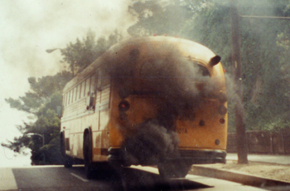
 There are some days here when I feel like I can’t breath. I wake up in the morning and I want to take a deep breath and welcome life in, but then I remind myself that I’m in San Salvador. Instead, I stretch, take medium breath, just enough to let myself know that I’m alive, and I continue on with my new day.
When I first got here, I kept waking up with a sore throat. I would tell people this, and they would say that I’m getting a little gripe, and would go on to tell me that it’s because of the lluvia. But as the day went on, this would clear up, and that was that. But I came to figure out that I did not have a gripe and the lluvia had little to do with my sore throat. In fact, my body was adjusting to the pollution of living in the city.
Now one would think I would be use to this by now after living in Detroit for the past year (and I use to live near River Rouge), but in fact, I find the conditions worse here.
There are some days that I sit on the bus, and cars pass by with the trail of black diesel smoke behind. And then there are the busses, with no sort regulations on the amount of pollution they create. I stand on the side of the road, waiting for whatever it is I am looking for, and I dream of wearing an oxygen mask. And then there are the days that I just dream of being in the campo.
The air is cleaner in the campo. You can smell wildlife and stoves burning (also not very good for the lungs..but they smell better than exhaust). Campo life is also a lot more tranquilo...and maybe that’s what I’m looking for.
I didn’t take any deep breaths today...I’m actually holding my breath for the day that I can. I think this country girl is just adjusting to city life....
Wednesday, November 02, 2005
Rosa Parks

Here's to show you that even criminals are good people. Even an every day citizen can spark change. Even women have voices.
Rosa Parks was a great woman and an important hero of our time. I hope we never forget the importance of one human being and what one soul can accomplish in a life.
(I found the photo on Google Images, complements of www.lawyernews.com )
Tuesday, November 01, 2005
Disaster Spirituality
 I was reading another mans blog the other day, looking for the perfect passage to inspire conversation in a reflection group. I was looking for a quote that would comment about spirituality in the midst of a disaster. A book called Like Grains of Wheat: A Spirituality of Solidarity had a perfect quote that I found in this particular blog, and it has really struck with me ever since.
This community also understood how much the disaster was worsened by the long legacy of injustice, repression and exploitation in these countries. They understood why the poor people who had been forced to live in areas most vulnerable to natural disasters were once again the vast majority of the dead, injured, and homeless. They understood how the deforestation and over development had altered the climate of the region and left the earth vulnerable to the landslides and flooding caused by seven days of torrential rains.
Solidarity means more than giving food to the hungry and shelter to the homeless, it also means addressing the question of why they are hungry and homeless.
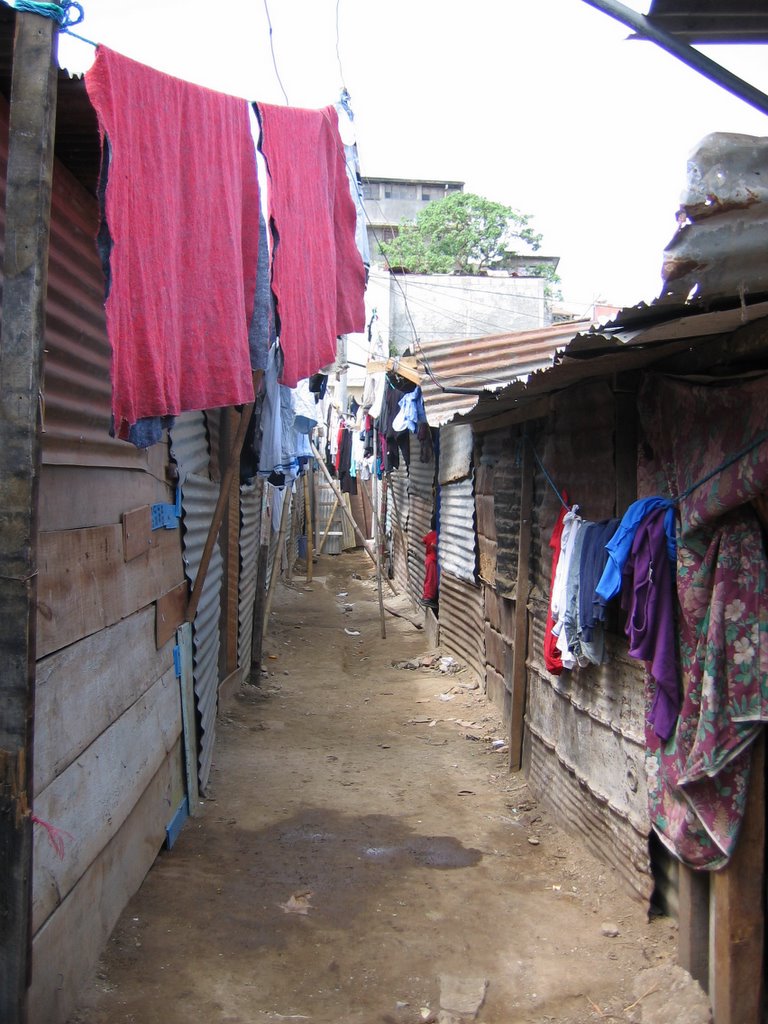
Here in El Salvador, asking the question of why has been very present in my mind lately. After a month of disaster, one simply prays that things will just stop. After watching the news every day, seeing people suffer, listening to the government and their lies, things just become more frustrating. I sit on the bus and I can’t help but wonder what life was or is like for the person sitting next to me. Sometimes I imagine them leaving their house in the morning, saying goodbye to their family. In my mind, the person sitting next to me lives in a home made of scrap metal and wood, and sometimes in my mind, the house is resting on a hill with a straight drop down.
It’s easy to imagine these conditions, because I see them everyday. My bus drives by marginal communities where homes have fallen in the valley below due to the rain, earthquakes and mudslides. It’s not hard to find someone around here who hasn’t been affected this way. And that is the reality that sticks with me every day. I wish it was just me and an active imagination, but this time reality tells the truth.
So if I am really a person of solidarity, then it is my responsibility to ask the tough questions. And trust me, I’ve asked these questions before, but this time it’s different, because I had this little revelation of sorts. It goes like this...
The so called "natural disasters"are caused by unexplainable forces of the earth. But we know that with things like global warming, the patterns and reactions fo the earth are changing every day. And we know that part of the problem of global warming and other abuses of the earth are caused by an over consumption and pollution of the earths people. But ask yourself, who is doing the over consuming here? Is it the campesino who still uses an ox to till his field, or is it the rich guy who insists on driving his BMW to work everyday instead of taking the bus, even if it’s just for a mile and a half?
El Salvador had a hurricane, earthquake and volcanic eruption all in one week. The effects included flooding, mudslides, falling volcanic ash, power outages, contaminated water, destroyed homes (the list goes on). The fact that all three of these "natural disasters"occurred in one week, doesn’t really seem like coincidence anymore.
When you think about who uses the majority of the earths resources or where the rich have placed the poor people of the world, it is not hard to see all the strings attached to this "natural disaster". Not only is the current situation in El Salvador, and all over the world, a perfect example of environmental racisism, but its also are really good example of a generational cover up of one giant human rights violation.
I think that the term "natural disaster"was created to take blame off of someone, or some body of individuals (ie the government). I think that when we use the phrase "natural disaster"we are welcomed to feel sorry for those affected, but we aren’t encouraged or mandated to change our lives.
Blame it on God....blame it on the earth...blame it on the cosmos...whatever. But why would anyone actually take the blame for the historical proof of oppression that has contributed to the suffering that we know today?
This is not a conspiracy theory...this is not some kind of liberal crap on a stick. This is what the poor have known for a long time. Think about it....
The tsunami, earthquakes, hurricanes, floods, mudslides, wars...who are the ones who suffer and die?
Sunday, October 23, 2005
Voces Inocentes
 (This photo was found with Google Images on the website of Cine Premiere)
A few days ago I watched this film called Voces Inocentes (Innocent Voices). It was one of the first things I heard about when I came to El Salvador. EVERYONE asked me if I had seen the film, and being the new gringa on the block, I could barely figure out what the heck they were asking me. But, I am proud to say that I purchased a pirated copy of the film the other day and watched it in its entirety in the original Spanish (no subtitles for me, unless I wanted to read the Portuguese, because English wasn’t available).
Let me just begin by saying that Voces Inocentes is one of the best films that I’ve ever seen (and if you know me and my little obsession with film, that’s saying a lot). I don’t know, I have just been thinking about this film all week since I’ve seen it. I want to watch it again, but I’m trying to pace myself. The story is really compelling, but watching it in El Salvador is like having a religious experience. It’s hard to explain (even for me).
Voces Inocentes is the true story of Oscar Torres, the screenwriter of this film. The main character, Chava, is only eleven years old but he has become the "man of the house" as his father abandons the family in the middle of the civil war (typical of a Salvadoran family during the war and today for that matter). At this ripe age, Chava not only watches the violence of the war erupt in his community, in his school and in his life, but he has to face the reality that in one years time, he will turn twelve. During the war, the Salvadoran government forcefully recruited twelve year old boys to fight in the war against the guerilla forces of the FMLN. It’s a reality he dreads and you can certainly see that his tender heart is not meant for the life of a soldier.
Chava’s story is not unique to El Salvador or the world for that matter. TODAY there are more than 300,000 child soldiers fighting in more than 40 countries (statistic found on VI website). As I learn more about the realities of El Salvador, I am always amazed at the individual stories of people here. I have met people just like Chava and his family. And I think for me, that is what made this film all the more real.
I seriously recommend that you see this film. Spend the ten bucks if you can or get yourself a pirated copy like I did!!! It’s a great way to learn about the reality I am finding, as well as entering into Salvadoran culture in a unique way. Plus, I am always a fan of education through film. And when you do see the film, let me know what you think.
Here’s the film website for you http://www.innocentvoicesmovie.com/eng/HTML/home.html
Sunday, October 16, 2005

Blast from the Past
I just came across this old blog that I wrote in college. I am deciding to keep it only for the purpose of showing that life is a process. If you care to indulge yourself, then by all means, do so. http://snazzychica.diaryland.com/
Homosexual y Cochino
"Homosexual y Cochino"
This past week, I encountered the rather rampant homophobia of the Latin American world. Backed by a culture of machismo, El Salvador seems to take certain social cues from their religion of choice. If it isn’t the legalism of Catholicism, it’s the over emphasis of particular biblical versus emphasized within evangelical Protestant churches. Either way, the horrid displays of homophobia here seem to be a common practice.
This week while I was in the campo doing migration education in small communities, I came across two incidences of direct homophobia that exhibited a certain lack of diversity education.
Examples:
1. While sitting in the car outside of the local house of culture in Santa Elena, I noticed some graffiti on the next building. The words, "Homosexual y Cochino"were displayed. I certainly could figure out what the homosexual part was all about, but this word, "cochino" was something new, and something told me it wasn’t good. I asked what cochino meant. As it turns out, cochino means dirty, like a pig. So apparently, someone at this place where graffiti is, is considered gay and dirty.
As it turns out, the graffiti was on the wall of the local post office. In that case, I wonder, what exactly does this graffiti imply?
The letter carriers must be gay and dirty, or maybe the woman at the front desk? No, maybe these individuals in question mean to say that anyone who enters the post office or benefits from their services is gay and dirty! Certainly that can’t be it!
I tried to wrap my head around this phrase and what it meant, but I came up empty.
Typically with homophobic individuals, they have this belief that homosexuality is wrong, however, they don’t have any great evidence for their beliefs. They may be able to cite a biblical quote, or give a stunning moral example (those men who have sex together just isn’t "natural".) But most of the time, the actual argument of a homophobic person has no real educational or intellectual backing.
Incidentally, this graffiti on the post office was situated directly across the street from an evangelical church that was blasting religious propaganda. I wonder if there is a connection?
2. While driving to a more remote location, we passed by a house with a "manwoman". In other words, a transgendered person lives at this house. While passing by the house, the person in question, was sitting on the porch and waved and smiled at us. "Cindy"as she is called, was once a man, but had an operation, and now she is a woman.
Certainly, this operation that Cindy had was expensive and rather time consuming. I found it interesting that she actually went through with the whole operation, in light of the economic strain. It’s something I wouldn’t have expected in El Salvador. Certainly I am not implying that there are no transgendered people in El Salvador, but I just assumed that the actual operation would be too costly for Salvadorans.
At any rate, the individuals that were in the car with me, who pointed Cindy out to me, didn’t seem to mind too much about her change. They laughed a little bit about the concept and continued on. I expressed that I had friends that were the same as Cindy (and I wished I had a more politically correct word in my vocabulary to explain "transgendered") and they seemed to be a bit surprised (as if they didn’t know that more of these people existed), but in total, they didn’t seem to care too much about Cindy.
In general, I’m not sure their reactions were as much homophobic as they were a direct result of a lack of diversity education...something pretty typical in the campo of El Salvador.
Nevertheless, I will continue to monitor the situation of homophobia here in El Salvador. It is certainly not easy being gay in this world. Of course some places are more accepting of diversity than others, but El Salvador is certainly not a the top of the list. Incidentally, neither is CRS (just a point of reference).
This past week, I encountered the rather rampant homophobia of the Latin American world. Backed by a culture of machismo, El Salvador seems to take certain social cues from their religion of choice. If it isn’t the legalism of Catholicism, it’s the over emphasis of particular biblical versus emphasized within evangelical Protestant churches. Either way, the horrid displays of homophobia here seem to be a common practice.
This week while I was in the campo doing migration education in small communities, I came across two incidences of direct homophobia that exhibited a certain lack of diversity education.
Examples:
1. While sitting in the car outside of the local house of culture in Santa Elena, I noticed some graffiti on the next building. The words, "Homosexual y Cochino"were displayed. I certainly could figure out what the homosexual part was all about, but this word, "cochino" was something new, and something told me it wasn’t good. I asked what cochino meant. As it turns out, cochino means dirty, like a pig. So apparently, someone at this place where graffiti is, is considered gay and dirty.
As it turns out, the graffiti was on the wall of the local post office. In that case, I wonder, what exactly does this graffiti imply?
The letter carriers must be gay and dirty, or maybe the woman at the front desk? No, maybe these individuals in question mean to say that anyone who enters the post office or benefits from their services is gay and dirty! Certainly that can’t be it!
I tried to wrap my head around this phrase and what it meant, but I came up empty.
Typically with homophobic individuals, they have this belief that homosexuality is wrong, however, they don’t have any great evidence for their beliefs. They may be able to cite a biblical quote, or give a stunning moral example (those men who have sex together just isn’t "natural".) But most of the time, the actual argument of a homophobic person has no real educational or intellectual backing.
Incidentally, this graffiti on the post office was situated directly across the street from an evangelical church that was blasting religious propaganda. I wonder if there is a connection?
2. While driving to a more remote location, we passed by a house with a "manwoman". In other words, a transgendered person lives at this house. While passing by the house, the person in question, was sitting on the porch and waved and smiled at us. "Cindy"as she is called, was once a man, but had an operation, and now she is a woman.
Certainly, this operation that Cindy had was expensive and rather time consuming. I found it interesting that she actually went through with the whole operation, in light of the economic strain. It’s something I wouldn’t have expected in El Salvador. Certainly I am not implying that there are no transgendered people in El Salvador, but I just assumed that the actual operation would be too costly for Salvadorans.
At any rate, the individuals that were in the car with me, who pointed Cindy out to me, didn’t seem to mind too much about her change. They laughed a little bit about the concept and continued on. I expressed that I had friends that were the same as Cindy (and I wished I had a more politically correct word in my vocabulary to explain "transgendered") and they seemed to be a bit surprised (as if they didn’t know that more of these people existed), but in total, they didn’t seem to care too much about Cindy.
In general, I’m not sure their reactions were as much homophobic as they were a direct result of a lack of diversity education...something pretty typical in the campo of El Salvador.
Nevertheless, I will continue to monitor the situation of homophobia here in El Salvador. It is certainly not easy being gay in this world. Of course some places are more accepting of diversity than others, but El Salvador is certainly not a the top of the list. Incidentally, neither is CRS (just a point of reference).
Monday, October 10, 2005
Gay? What is that all about?
There are times when the search for personal identity can be one of the most painful moments in a persons life. There are realities that one faces, harsh realizations, and tender moments left to reconcile with. It’s all a part of being alive, of being fully human...accepting and loving the depths of who you are. This metamorphosis is a right of passage made of internal growth to build inner beauty and strong character. However, not everyone has such a positive awakening of self. There are those among us who struggle with who they are, simply because there are those who will reject their life and the love they have within them.
Tomorrow is October 11th, National Coming Out Day. In the United States, millions of gay, lesbian, bisexual and transgendered individuals will come together and celebrate who they are. This special day is meant to be a testament to the nation, that the GLBT community is strong in love. It is a day to encourage open hearts, and acceptance within society so that some day we might have the RIGHT to LOVE those in our lives.
The theme for this years National Coming Out Day is “Talk About It”.
Society is only as homophobic as you let it be. If you listen to the gay joke and don’t say that you are offended, you might as well have told the joke yourself (don’t worry, we’ve all been there). If you haven’t come out as a straight ally yet, you should do so, because our real allies are those who are out of the closet too. And if you are gay, you know that coming out is a process, and so on this day, continue your process of loving and living well, by being OUT in your communities.
No one said this was going to be easy, and as any gay person can tell you, some days are better than others.
The following is a short list of things you can do to be a better ally or even combat the homophobia within you. Hey, lets be honest, not everyone is ready to accept gay people for who they are, but that doesn’t mean that they can’t change.
1. Express your love. If you know someone who identifies as GLBT, make sure you tell them how much you appresiate them. Give them a hug and tell them that you love them. Many times, we lose those we love because a lack of acceptance. Families disown us, friends can do the same. We end up building our own families and communities, but it is always important to know that we are loved. So on this day, shower you GLBT family and friends with love. Leave your judgement at the door, and simply let them know that you care.
2. Come out as an ally. Nothing says I love you more than standing up to homophobia and oppression. Real commitment in a relationship is demonstrating loyalty in the difficult moments, and sometimes it’s as easy as wearing a T-shirt that people will see, and know that you are accepting of the GLBT community. Here’s one you can check out… http://www.finebyme.org/
To be a ally, check this out…
3. Educate yourself a bit. If you don’t know a lot of gay people, or haven’t been a part of someone’s “coming out story”, then now is the time to of awareness for you. Many times, coming out is traumatic and painful, but on the flip side, realizing one’s sexuality can be a liberating moment full of love and acceptance. Check out these coming out stories, and learn what it’s like.
But don’t stop the education there, expand your world and start meeting people. Watch a movie that has a gay person in it. Read a book by a gay author, or attend a lecture in your area about homophobia. Every little moment is important for you, and each experience should be processed through dialogue and self reflection. We all have to begin somewhere, and education is always the first step. (Note: If you want to get really educated, find out what it’s like for GLBT individuals in other countries. Depending on cultural differences, things can be a lot more difficult and even violent. And in our sheltered world, the reality can be eye opening.)
4. Host a GLBT friendly event. Maybe you will host a GLBT documentary and speaker at a local community center, or encourage religious dialogue at your own church. Any event that promotes dignity and love of the GLBT community is another step in the right direction .
5. Monitor your words and encourage healthy dialogue. In the spirit of this years theme, freely talking about GLBT issues in every facet of life means one less place we have to be closeted. Learn about the power of words and identify those phrases in the lives of GLBT individuals that are encouraging and those that are offensive. Many times, these words will be different for everyone, but it never hurt to ask. Here is a list of terminology you might want to stay away from.
* Fag or faggot or dyke
* Lifestyle
* Love the sinner, hate the sin.
* Homo
* Fruit
Look, this is the bottom line. It’s damn hard to be gay these days, but it sure is a lot easier than it was in the past. We can use all the help we can get, so that one day we can lead lives with the same rights as everyone else. We are normal people who go to church, have families, jobs, we vote and we have love in our lives. Being gay is not about sex...it’s about love...and it’s about identity. We’ve all lost people in our lives because they couldn’t love and accept us for who we are, but now is the time to start accepting new people in our lives who are willing to love AND fight oppression by our side.
Tomorrow is October 11th, National Coming Out Day. In the United States, millions of gay, lesbian, bisexual and transgendered individuals will come together and celebrate who they are. This special day is meant to be a testament to the nation, that the GLBT community is strong in love. It is a day to encourage open hearts, and acceptance within society so that some day we might have the RIGHT to LOVE those in our lives.
The theme for this years National Coming Out Day is “Talk About It”.
Society is only as homophobic as you let it be. If you listen to the gay joke and don’t say that you are offended, you might as well have told the joke yourself (don’t worry, we’ve all been there). If you haven’t come out as a straight ally yet, you should do so, because our real allies are those who are out of the closet too. And if you are gay, you know that coming out is a process, and so on this day, continue your process of loving and living well, by being OUT in your communities.
No one said this was going to be easy, and as any gay person can tell you, some days are better than others.
The following is a short list of things you can do to be a better ally or even combat the homophobia within you. Hey, lets be honest, not everyone is ready to accept gay people for who they are, but that doesn’t mean that they can’t change.
1. Express your love. If you know someone who identifies as GLBT, make sure you tell them how much you appresiate them. Give them a hug and tell them that you love them. Many times, we lose those we love because a lack of acceptance. Families disown us, friends can do the same. We end up building our own families and communities, but it is always important to know that we are loved. So on this day, shower you GLBT family and friends with love. Leave your judgement at the door, and simply let them know that you care.
2. Come out as an ally. Nothing says I love you more than standing up to homophobia and oppression. Real commitment in a relationship is demonstrating loyalty in the difficult moments, and sometimes it’s as easy as wearing a T-shirt that people will see, and know that you are accepting of the GLBT community. Here’s one you can check out… http://www.finebyme.org/
To be a ally, check this out…
3. Educate yourself a bit. If you don’t know a lot of gay people, or haven’t been a part of someone’s “coming out story”, then now is the time to of awareness for you. Many times, coming out is traumatic and painful, but on the flip side, realizing one’s sexuality can be a liberating moment full of love and acceptance. Check out these coming out stories, and learn what it’s like.
But don’t stop the education there, expand your world and start meeting people. Watch a movie that has a gay person in it. Read a book by a gay author, or attend a lecture in your area about homophobia. Every little moment is important for you, and each experience should be processed through dialogue and self reflection. We all have to begin somewhere, and education is always the first step. (Note: If you want to get really educated, find out what it’s like for GLBT individuals in other countries. Depending on cultural differences, things can be a lot more difficult and even violent. And in our sheltered world, the reality can be eye opening.)
4. Host a GLBT friendly event. Maybe you will host a GLBT documentary and speaker at a local community center, or encourage religious dialogue at your own church. Any event that promotes dignity and love of the GLBT community is another step in the right direction .
5. Monitor your words and encourage healthy dialogue. In the spirit of this years theme, freely talking about GLBT issues in every facet of life means one less place we have to be closeted. Learn about the power of words and identify those phrases in the lives of GLBT individuals that are encouraging and those that are offensive. Many times, these words will be different for everyone, but it never hurt to ask. Here is a list of terminology you might want to stay away from.
* Fag or faggot or dyke
* Lifestyle
* Love the sinner, hate the sin.
* Homo
* Fruit
Look, this is the bottom line. It’s damn hard to be gay these days, but it sure is a lot easier than it was in the past. We can use all the help we can get, so that one day we can lead lives with the same rights as everyone else. We are normal people who go to church, have families, jobs, we vote and we have love in our lives. Being gay is not about sex...it’s about love...and it’s about identity. We’ve all lost people in our lives because they couldn’t love and accept us for who we are, but now is the time to start accepting new people in our lives who are willing to love AND fight oppression by our side.
A Haiku (or Three)
A Haiku or Three
1. Great heart of depth
transparent visionary
compassion spirit.
2. Connected to one
trusting liberator feels
humble in stillness.
3. Passion, loyal, fee
gracious in mind, body, soul
connected to you.
1. Great heart of depth
transparent visionary
compassion spirit.
2. Connected to one
trusting liberator feels
humble in stillness.
3. Passion, loyal, fee
gracious in mind, body, soul
connected to you.
Thursday, October 06, 2005
Trapped
We’re in the middle of a national disaster here. There’s a very testy volcano, a hurricane just passed over us, and the rain doesn’t seem to want to let up. There are mud slides everywhere, flooding in the streets and there are thousands of refugees in shelters all around El Salvador. The poor are suffering immensely here, and I can’t help but wonder where God is in all of this.
Today on the news I saw one particular story that has been challenging my heart. In times like this, it can become second nature to turn your heart off when there is such extreme suffering all around. During these moments, may be easier to watch the news and see the devastation and think, “It’s not me!” But I can’t be like that. I can’t just turn my heart off when things get difficult, or when I feel that my breath is being taken away. There is a part of me that naturally enters into the intensity of the moment, even though it is difficult. Today there was a moment while watching the news, that a felt my heart leading in that direction.
The story goes like this...there was a mudslide, and the force of the mud crashed into a cement home that left the building destroyed. There were three children in that home when the slide occurred, but the rest of the family was not in the home at the time. Two of these small children died within the rubble of their home, but one little girl was still holding onto her life. She had been trapped in such a way, that the bottom half of her body was covered with cement blocks and pieces of her house. She rested on her stomach, sometimes crying in agony, as the rescue workers labored to set her free.
The camera crew on this particular news worthy event, made sure to get a closeup of all the action. The collected shots of a rescue worker wiping the blood from the girls head, or another worker lifting pieces of rubble off her tiny body. The reporter also made sure to comments from the crowd.
He asked one rescue worker, “Why didn’t this family leave the house yesterday for the shelter?”
The man replied, “We asked them, but they didn’t want to leave.”
The reporter then found the mother of the child, a woman who already lost two children today, and was facing the possibility of losing this girl too. The reporter asked the mother, “why didn’t you leave yesterday when the red cross asked you?” (You could hear the cries of the girl in the background.)
The mother, in tears replied, “We didn’t want to go to a shelter. We’ve heard of those places, crowed, full of disease...and there’s no food. We decided to stay here.”
The reporter pressed on and said, “Now you have two dead children, and this other little girl is trapped.”
The mother cried.
The reporter went on to interview others, who commented and blamed the situation on the negligence of the family. The reporter seemed to prove his point, and just as he was wrapping up an interview, the little girl was being lifted out of the rubble.
She was calm, yet shivering. She was very conscious, and had an IV attached to her hand as five men carried her away on a straight board. As she was being taken way, the reporters final comments on the situation were something towards the effect of, “Due to parents negligence, two children paid the price with their life, while this young girl will face pain.”
I watched this whole story unfold for five minutes, and then I saw it repeated on the next newscast. I found myself being more and more angry with that reporter. He was a man of privilege, at least to an extent. He had a steady job. His home probably isn’t in danger. And he will probably not have to spend his evening in a shelter tonight (unless of course, there is a big story there). And he will probably have a shower a good meal when he goes home tonight.
He is in a position of comfort, a place where it is easy to criticize others. But at a time like this, his privileged criticism was graphic and heartless (in my mind at the time).
The fact of the matter is, it doesn’t really matter what choice the parents made in the past. The reality was, there was a mud slide, that no one could control, and there was a girl in pain that needed more support and encouragement than a group of voyeuristic reporters looking for a good story.
The story that the reporter wasn’t telling was this...
There are shelters all over the city and the country, and the list of refugees keeps growing everyday. Despite nation wide collections of clothing, food and medicine, there is still not enough to meet the needs of the people. The shelters are over crowed with people who are already poor, and access to clean water and food is like a roll of the dice. People are sick, and unknowingly spreading diseases to each other, as they are in such cramped quarters, and they have no where else to go.
There reporters aren’t telling that story too often. They prefer the graphic details of people being crushed by buildings, or swept away by a flood. They forget about the dignity of the people, and the real humanity of all of this. The reality is, it is the poor who are suffering here in El Salvador. And if Christians want to talk about the crucified Christ, he is here today in the midst of all this destruction and pain. The cries of a young girl pinned down by cement, is Christ speaking to our hearts, and begging us to give a damn, because his daughter, who he loves, is suffering.
I think if we are honest with ourselves, and the reality around us everyday, we have the ability to see Christ in everything. We have the ability to discern his voice in a difficult situation, and face the challenges that are put in front of us. It is the voice of Christ that encourages us to ask questions, while still leaving room for the dignity of those around us.
I see poverty every day here, and it is hard for me to not engage my heart. I have seen many of these things before, but today this little girl will serve as a reminder for me.
I will remember how she and her family were not treated with dignity.
I will remember the calm demeanor of the little girl, and her cries of pain.
I will remember the choices that were made by the girl’s family, and remind myself that often the poor are trapped between inhumane conditions on both sides.
I will remember that Christ was present, although I couldn’t necessarily identify him.
Today on the news I saw one particular story that has been challenging my heart. In times like this, it can become second nature to turn your heart off when there is such extreme suffering all around. During these moments, may be easier to watch the news and see the devastation and think, “It’s not me!” But I can’t be like that. I can’t just turn my heart off when things get difficult, or when I feel that my breath is being taken away. There is a part of me that naturally enters into the intensity of the moment, even though it is difficult. Today there was a moment while watching the news, that a felt my heart leading in that direction.
The story goes like this...there was a mudslide, and the force of the mud crashed into a cement home that left the building destroyed. There were three children in that home when the slide occurred, but the rest of the family was not in the home at the time. Two of these small children died within the rubble of their home, but one little girl was still holding onto her life. She had been trapped in such a way, that the bottom half of her body was covered with cement blocks and pieces of her house. She rested on her stomach, sometimes crying in agony, as the rescue workers labored to set her free.
The camera crew on this particular news worthy event, made sure to get a closeup of all the action. The collected shots of a rescue worker wiping the blood from the girls head, or another worker lifting pieces of rubble off her tiny body. The reporter also made sure to comments from the crowd.
He asked one rescue worker, “Why didn’t this family leave the house yesterday for the shelter?”
The man replied, “We asked them, but they didn’t want to leave.”
The reporter then found the mother of the child, a woman who already lost two children today, and was facing the possibility of losing this girl too. The reporter asked the mother, “why didn’t you leave yesterday when the red cross asked you?” (You could hear the cries of the girl in the background.)
The mother, in tears replied, “We didn’t want to go to a shelter. We’ve heard of those places, crowed, full of disease...and there’s no food. We decided to stay here.”
The reporter pressed on and said, “Now you have two dead children, and this other little girl is trapped.”
The mother cried.
The reporter went on to interview others, who commented and blamed the situation on the negligence of the family. The reporter seemed to prove his point, and just as he was wrapping up an interview, the little girl was being lifted out of the rubble.
She was calm, yet shivering. She was very conscious, and had an IV attached to her hand as five men carried her away on a straight board. As she was being taken way, the reporters final comments on the situation were something towards the effect of, “Due to parents negligence, two children paid the price with their life, while this young girl will face pain.”
I watched this whole story unfold for five minutes, and then I saw it repeated on the next newscast. I found myself being more and more angry with that reporter. He was a man of privilege, at least to an extent. He had a steady job. His home probably isn’t in danger. And he will probably not have to spend his evening in a shelter tonight (unless of course, there is a big story there). And he will probably have a shower a good meal when he goes home tonight.
He is in a position of comfort, a place where it is easy to criticize others. But at a time like this, his privileged criticism was graphic and heartless (in my mind at the time).
The fact of the matter is, it doesn’t really matter what choice the parents made in the past. The reality was, there was a mud slide, that no one could control, and there was a girl in pain that needed more support and encouragement than a group of voyeuristic reporters looking for a good story.
The story that the reporter wasn’t telling was this...
There are shelters all over the city and the country, and the list of refugees keeps growing everyday. Despite nation wide collections of clothing, food and medicine, there is still not enough to meet the needs of the people. The shelters are over crowed with people who are already poor, and access to clean water and food is like a roll of the dice. People are sick, and unknowingly spreading diseases to each other, as they are in such cramped quarters, and they have no where else to go.
There reporters aren’t telling that story too often. They prefer the graphic details of people being crushed by buildings, or swept away by a flood. They forget about the dignity of the people, and the real humanity of all of this. The reality is, it is the poor who are suffering here in El Salvador. And if Christians want to talk about the crucified Christ, he is here today in the midst of all this destruction and pain. The cries of a young girl pinned down by cement, is Christ speaking to our hearts, and begging us to give a damn, because his daughter, who he loves, is suffering.
I think if we are honest with ourselves, and the reality around us everyday, we have the ability to see Christ in everything. We have the ability to discern his voice in a difficult situation, and face the challenges that are put in front of us. It is the voice of Christ that encourages us to ask questions, while still leaving room for the dignity of those around us.
I see poverty every day here, and it is hard for me to not engage my heart. I have seen many of these things before, but today this little girl will serve as a reminder for me.
I will remember how she and her family were not treated with dignity.
I will remember the calm demeanor of the little girl, and her cries of pain.
I will remember the choices that were made by the girl’s family, and remind myself that often the poor are trapped between inhumane conditions on both sides.
I will remember that Christ was present, although I couldn’t necessarily identify him.
Materialism
I come from a culture of consumerism, a place where materialism can be likened to storing treasures in heaven. In this culture, everyone has stuff (Stuff: a technical term for the clutter of possessions that one acquires within a period of time). And like a creature of habit, I too acquire objects to fill space in my life.
There are people in my life who think that I am not materialistic. They think that since I move to these far off places of the world, with two bags and a carry on, that I am not exercising materialism. They think that I am not attached to the stuff in my life, and that I am above the struggle of acculturation within my society.
I am here to tell a different story.
The fact of the matter is, I struggle with materialism. Like an alcoholic that craves a drink, I too crave certain luxuries in life. And at times, I have found myself stretched, when thinking how to do without these things that apparently bring richness to my life.
Lets take an inventory of the things I brought with me to El Salvador.
The Basics:
Clothing... I have some really hot T-shirts for every occasion of life. I have a collection of fun T-shirts that I find for cheap at second hand places, and the great find is half the excitement. And while we’re on the subject of T-shirts, let me just note that I wear half the clothing I brought, and the rest is still packed in a bag.)
Shoes...I did ok in this department. Two pairs of sneakers, two sandals and one pair of dress shoes. I love a good pair of shoes, but the reality is, I don’t wear too many shoe combinations here. So I don’t need them.
Music... Many of you know that my interest in music spans the gamete, and collecting albums over the years, as equaled one really large collection. And to conserve space, I managed to put most of my favorite music on my laptop.
Books... If you have been to my parents house, you will know that the small square of space that I call my room is filled with bookcases of books. I read everything from history books (my favorite is Latin American History), travel books, poetry and books on theology and prayer. I literally have hundreds of books that I have read or partially read. Now, when it comes to El Salvador, I was able to restrict myself quite well (I
There are people in my life who think that I am not materialistic. They think that since I move to these far off places of the world, with two bags and a carry on, that I am not exercising materialism. They think that I am not attached to the stuff in my life, and that I am above the struggle of acculturation within my society.
I am here to tell a different story.
The fact of the matter is, I struggle with materialism. Like an alcoholic that craves a drink, I too crave certain luxuries in life. And at times, I have found myself stretched, when thinking how to do without these things that apparently bring richness to my life.
Lets take an inventory of the things I brought with me to El Salvador.
The Basics:
Clothing... I have some really hot T-shirts for every occasion of life. I have a collection of fun T-shirts that I find for cheap at second hand places, and the great find is half the excitement. And while we’re on the subject of T-shirts, let me just note that I wear half the clothing I brought, and the rest is still packed in a bag.)
Shoes...I did ok in this department. Two pairs of sneakers, two sandals and one pair of dress shoes. I love a good pair of shoes, but the reality is, I don’t wear too many shoe combinations here. So I don’t need them.
Music... Many of you know that my interest in music spans the gamete, and collecting albums over the years, as equaled one really large collection. And to conserve space, I managed to put most of my favorite music on my laptop.
Books... If you have been to my parents house, you will know that the small square of space that I call my room is filled with bookcases of books. I read everything from history books (my favorite is Latin American History), travel books, poetry and books on theology and prayer. I literally have hundreds of books that I have read or partially read. Now, when it comes to El Salvador, I was able to restrict myself quite well (I
Wednesday, October 05, 2005
Bastante...
In the Spanish language the word “Bastante”means “enough”. But the meaning goes further than this simple translation. This one word is used to describe the degree to which something happens. In a common conversation, for instance, you will find a Salvadoran explaining that it rained enough (meaning that it rained an adaquate amount or maybe a little too much).
I happened to learn the more profound meaning of “Bastante”after my first week here, and lately, I’ve just been relishing in the intensity of this simple statement.
Just after my first week in El Salvador, I was invited to a national conference of migrants and migrant organizations. I went with a coworker and I met others associated with the issue once I was there. I was just getting my feel for the country, and the new issues of my life, and so naturally, I was asking a lot of questions and simply watching what was happening around me.
The organization that I work with happens to be one of the leading migrant organizations in the field, and we had helped organize this conference. There seemed to be a lot of people at the conference, and I had noticed a few people that were pointed out as migrants.
At one point, I asked Luiz, my token tour guide at work, what I thought was a simple question.
I asked, “How many migrants are here?”
Being a typical American I guess, I must have been looking for some kind of cumulative answer that would result in a positive or negative reaction. It’s not like I knew what a lot or a little was at this point, but it was a simple Spanish sentence in my world, and chances are, the answer would be simple (in the form of numbers, that are easy to translate).
Instead I received this answer....
Luiz said to me, “the question is not ‘how many migrants are here,’ the answer is bastante.
And he left it at that...for me to figure out.
In the context of Salvadoran culture, his answer explains a lot about the people here. What he was saying was this...
It doesn’t really matter how many migrants were at the conference, the fact that there WERE migrants there, was enough! The fact that migrants were represented there, was enough! The fact that migrants could come back to El Salvador from the US (which is quite the sticky situation, and quite dangerous at times), was enough! Luiz was telling me that there were enough migrants at that conference to offer a voice for those who attended and the larger international community.
Here in El Salvador, the outcome of an even is not measured on the amount of data collected, or the number of people that attended. The real measurement is in relation to the quality of interactions within people. The fact that migrant organizations in the US and those in El Salvador could spend time in one room for a while and share thoughts and ideas, was enough reason to have such a conference. The fact that migrants could come to this place and speak about their experience, and maybe see their family and country again, was enough reason to have such a conference.
Bastante means enough, but it means more in this cultural context, and once I figured this out, I understood a lot more.
For example, I was invited to another migrant conference a week later at a swanky hotel called the Intercontinental. The kind of place that would be hundreds of dollars in the US...a place where the rich go to be wined and dined. (So much for simple living!)
At any rate, there were more people from the public at this conference, people who belonged to other organizations that worked with migrants in some way. At this conference, we were presenting current information for other organizations and the press, on the current state of migrants here and abroad.
A coworker of mine came to the conference late, and asked me how many people actually showed, followed by “bastante?”
I replied, “Si, bastante!”
I haven’t mastered the Spanish language but certain little realizations go a long way.
***For a little treat, check out this link and find a picture of me. I am the one in between two men, the guy sleeping is Luiz! How perfect!
http://www.laprensagrafica.com/dpt15/noticias/04092005/294722.asp
I happened to learn the more profound meaning of “Bastante”after my first week here, and lately, I’ve just been relishing in the intensity of this simple statement.
Just after my first week in El Salvador, I was invited to a national conference of migrants and migrant organizations. I went with a coworker and I met others associated with the issue once I was there. I was just getting my feel for the country, and the new issues of my life, and so naturally, I was asking a lot of questions and simply watching what was happening around me.
The organization that I work with happens to be one of the leading migrant organizations in the field, and we had helped organize this conference. There seemed to be a lot of people at the conference, and I had noticed a few people that were pointed out as migrants.
At one point, I asked Luiz, my token tour guide at work, what I thought was a simple question.
I asked, “How many migrants are here?”
Being a typical American I guess, I must have been looking for some kind of cumulative answer that would result in a positive or negative reaction. It’s not like I knew what a lot or a little was at this point, but it was a simple Spanish sentence in my world, and chances are, the answer would be simple (in the form of numbers, that are easy to translate).
Instead I received this answer....
Luiz said to me, “the question is not ‘how many migrants are here,’ the answer is bastante.
And he left it at that...for me to figure out.
In the context of Salvadoran culture, his answer explains a lot about the people here. What he was saying was this...
It doesn’t really matter how many migrants were at the conference, the fact that there WERE migrants there, was enough! The fact that migrants were represented there, was enough! The fact that migrants could come back to El Salvador from the US (which is quite the sticky situation, and quite dangerous at times), was enough! Luiz was telling me that there were enough migrants at that conference to offer a voice for those who attended and the larger international community.
Here in El Salvador, the outcome of an even is not measured on the amount of data collected, or the number of people that attended. The real measurement is in relation to the quality of interactions within people. The fact that migrant organizations in the US and those in El Salvador could spend time in one room for a while and share thoughts and ideas, was enough reason to have such a conference. The fact that migrants could come to this place and speak about their experience, and maybe see their family and country again, was enough reason to have such a conference.
Bastante means enough, but it means more in this cultural context, and once I figured this out, I understood a lot more.
For example, I was invited to another migrant conference a week later at a swanky hotel called the Intercontinental. The kind of place that would be hundreds of dollars in the US...a place where the rich go to be wined and dined. (So much for simple living!)
At any rate, there were more people from the public at this conference, people who belonged to other organizations that worked with migrants in some way. At this conference, we were presenting current information for other organizations and the press, on the current state of migrants here and abroad.
A coworker of mine came to the conference late, and asked me how many people actually showed, followed by “bastante?”
I replied, “Si, bastante!”
I haven’t mastered the Spanish language but certain little realizations go a long way.
***For a little treat, check out this link and find a picture of me. I am the one in between two men, the guy sleeping is Luiz! How perfect!
http://www.laprensagrafica.com/dpt15/noticias/04092005/294722.asp
Friday, September 30, 2005
Socialism?
I found this quote today that has been sitting with me. Maybe it will sit with you as well and make you think. That is the point, is it not?
"You cannot claim to worship Jesus in the Tabernacle, if you do not pity Jesus in the slums. . . It is folly -- it is madness -- to suppose that you can worship Jesus in the Sacraments and Jesus on the throne of glory, when you are sweating him in the souls and bodies of his children."
- - Bishop Frank Weston at the 1923 Anglo-Catholic Congress
"You cannot claim to worship Jesus in the Tabernacle, if you do not pity Jesus in the slums. . . It is folly -- it is madness -- to suppose that you can worship Jesus in the Sacraments and Jesus on the throne of glory, when you are sweating him in the souls and bodies of his children."
- - Bishop Frank Weston at the 1923 Anglo-Catholic Congress
Wednesday, September 28, 2005
A Dead Man
During my third week in ES, I had just finished work and was going home a few minutes early to try to escape the rain. I walked my usual route to the bus station, and discovered a small crowd of people and a police car with officers. There was a man lying on the sidewalk, and police tape all around his body, a crowd of people watching and a police officer nonchalantly taking notes. I had come to realize that this man had died, and the investigation into his death had just begun. I had probably passed by this man earlier in the day, and now a few hours later, he was dead. There was no blood and no sign of a struggle (a least to my eyes). I had draw the possible conclusion that this man could have been one of the drunk men I had passed earlier in the afternoon. I thought it might have been possible that he had a heart attack, but the reality is, I didn’t know.
As plain as day, he was there, flat on his back, and very much not alive. No one seemed to pay too much attention besides the initial moment of their discovery, and I had come to realize that this was just another regular thing that happened quite often here. With a culture that has a memory of war, and the assassinations of their past, why would a random dead man mean more now? As people, and even children have become accustomed to seeing death, why would this scene be more shocking? The fact is, this is a normal part of life, and at least for the next year and a half, it may become part of my reality as well.
As plain as day, he was there, flat on his back, and very much not alive. No one seemed to pay too much attention besides the initial moment of their discovery, and I had come to realize that this was just another regular thing that happened quite often here. With a culture that has a memory of war, and the assassinations of their past, why would a random dead man mean more now? As people, and even children have become accustomed to seeing death, why would this scene be more shocking? The fact is, this is a normal part of life, and at least for the next year and a half, it may become part of my reality as well.
Monday, September 19, 2005
Liberation Theology and Me
Disclaimer: As I am not one to wear ALL my thoughts on my sleeve, there are times that I chose to do so for clarity and maybe posterity. The following thoughts are not set in stone, but rather an account of what has been a long and continuous process of internal conversation and debate. These thoughts are not a final project, and therefore should be viewed in the context of history. Just for the record...I still like Jesus, and my faith hasn’t been lost...so don’t worry!
Lately I’ve been doing a lot of serious rethinking about what I really think about liberation theology and how that applies to using force in oppressive situations. I’ve always adhered to the nonviolent way of life and felt that this lifestyle was well complimented with my belief in liberation theology. Yet lately I’ve been having my doubts...or at least questions.
I finished reading this book called Mountains Beyond Mountains by Tracy Kidder. It was a New York Times bestseller, and has created a general stir in many intellectual circles, and I guess it has created a stir within me as well.
MBM tells the story of development in the life of Dr. Paul Farmer, as he is on a quest to help the most vulnerable of the world. As Motorcycle Diaries chronicles the awakening of the man we know as Che Guevara, MBM documents what a life can look like with such powerful awakenings of inequality and injustice.
The fact that I read this book when I first moved to El Salvador, is probably not just divine providence, but a little bit humorous as well. Nevertheless, the experience of reading this book while learning about the realities of El Salvador has been quite an experience to say the least.
Now, to the meat of my thoughts...I will begin with a quote from Farmer.
Farmer explains that he distrusts all ideologies, including his own, at least a little, because, “...all ologies fail us at some point. At some point, I suspect, not very far from where the Haitian poor live out their dangerous lives.” He goes on to say that, “If one pushes this ology to its logical conclusion, then God is to found in the struggle against injustice. But if the odds are so preposterously stacked against the poor - machetes versus Uzis, donkeys versus tanks, stones versus missiles, or even typhoid versus cancer - then is it responsible, is it wise, to push the poor to claim what is theirs by right? What happens when the destitute in Guatemala, El Salvador, Haiti, wherever, are moved by a rereading of the Gospels to stand up for what is theirs, to reclaim what was theirs and was taken away, to ask only that they enjoy decent poverty rather than the misery we see here every day in Haiti? We know the answer to that question, because we are digging up their bodies in Guatemala.”
For the record, let it be known that I too distrust ideologies at least a little bit, for the simple reason that the human condition, as complicated as it is, is never the same for any one person. There’s a larger philosophical debate within this statement, but it really doesn’t interest me at the moment, and so I will skip it for now.
In a simplistic form, liberation theology is a rereading of the Gospels in hopes that the wealthy may redistribute their wealth, and the poor may stand up for a future of equality. Before liberation theology, the poor were told to wait and withstand the trials here in this life, and their true reward would be coming in the form of salvation. This is a widely held Protestant belief today, and as s good Catholic girl with a completely different world view, I just can’t accept this reality / theology. If you really want to know what I think about this, continue on to the next paragraph for a slight tangent...otherwise skip the next paragraph and continue on.
Ok, so basically I think this Protestant belief (and lots of Catholics believe this as well) is a complete copout so that any blame can be removed. First of all, if you’re Protestant, chances are you think all of humanity is basically flawed and therefore, conversion to Christianity is the only way to go in terms of life long salvation, when you eventually leave this earth in death. With this kind of thought structure, any bad luck while on earth, is your lot in life. You’re expected to just grin and bear it, and your true reward will come in Heaven. For the poor of the world, this basically translates to “deal with it” and make sure you evangelize along the way. If you’re rich, well then, God has blessed you, and tithing 10% of your income is what God requires of you to be a good hospitable steward of the Lords creation. I have a huge problem with this view for more reasons than I can count, but basically, it gives rich Christians an excuse to feel comfortable in their wealth, while their “brothers and sisters”suffer and die because of an unequal distribution of goods and services. Heck, with this idea, evangelization for the purpose of salvation, gives people the illusion that they are actually doing something in life...helping out the situation if you will, and maybe storing up some brownie points with the Big Guy!
Now with liberation theology, the poor are encouraged by the revolutionary spirit of Jesus, to rise up with love in their heart, and reclaim their dignity....and really, reclaim their share of goods and services. With a bit of Marxist analysis, liberation theology calls for a redistribution of wealth and a general change within the class structures of the world.
This all sounds fine and dandy, however, it’s really hard to live out, and the consequences of this way of life are quite life threatening to many. This is exactly what brings me to my next little internal debate.
Here in El Salvador, 80% of my conversations are about the civil war of the 1980's that was funded by the US government. Everyday, I talk with people from the FMLN (former insurgents / guerillas) during the war....and just for the record, the FMLN is made up of the poor and intellectuals of the country that spoke out, and were assassinated everyday by US bullets funded by US tax dollars. Our current conversations focus on what life was like in El Salvador in the 1980's. We talk about the Peace Accords, and what a load of crap they are. We talk about the poor and how life is getting more difficult with imperialistic treaties like CAFTA. Mostly I ask a lot of questions, and occasionally, I offer my own thoughts, but I am finding that to be more difficult than I had bargained for.
I always thought, that if you really claimed to love humanity, how could you justify killing another person. Of course I can understand why a person would act in a violent way when protecting family, but I could never reconcile that action in my own life. Thus, with this questioning, living a nonviolent life has been met with minimal questions, especially in the US. I’ve found that I can agree with people like Che, right up until his revolution, and then the violence becomes too extreme, and a non-negotiable for me. Here in El Salvador, I’m not quite so sure I could come up with a positive alternative to the war that was fought here (and is still going on in other ways today...stay tuned to future blogs). When the government starts killing people? Sit around and watch as everyone you know is assassinated? It’s not like you can call on the international community...they are just as oppressive as the government of El Salvador. Heck, it was the US that helped created the whole mess here.
So people chose to take up arms, which I can understand...I just don’t know how that sits in my own heart. I asked my Spanish teacher about what she thought about nonviolence and if it would have worked here, and she said it wouldn’t. Besides the fact that the government was killing priests and nuns and getting away with it, they were also assassinating common people in broad daylight...all in the name of removing “Communism” from El Salvador.
So here’s the conflict in a nutshell. Nonviolence is a great concept to live by and has some really useful ideals for life. I think Jesus was a man of nonviolence and therefore, we should all strive to be like that. However, if you also adhere to Liberation Theology, my question is, how exactly do the poor stand up? Either way, they are stuck in a catch 22! You can either speak out and be shot...or you can shut up and be shot...you can rise up with arms (and maybe get away with your life). So exactly how is Liberation Theology a way to be like Jesus, if he was a man of nonviolence. Here lies the dilemma!
I have a feeling that at some point in my life I will reconcile this question somewhere in my heart. I have a feeling that this restlessness of questioning will eventually settle. It’s not like I’m in complete upheaval, just at a state of in-between! So stay tuned and maybe there will be more thoughts to come on this subject.
Lately I’ve been doing a lot of serious rethinking about what I really think about liberation theology and how that applies to using force in oppressive situations. I’ve always adhered to the nonviolent way of life and felt that this lifestyle was well complimented with my belief in liberation theology. Yet lately I’ve been having my doubts...or at least questions.
I finished reading this book called Mountains Beyond Mountains by Tracy Kidder. It was a New York Times bestseller, and has created a general stir in many intellectual circles, and I guess it has created a stir within me as well.
MBM tells the story of development in the life of Dr. Paul Farmer, as he is on a quest to help the most vulnerable of the world. As Motorcycle Diaries chronicles the awakening of the man we know as Che Guevara, MBM documents what a life can look like with such powerful awakenings of inequality and injustice.
The fact that I read this book when I first moved to El Salvador, is probably not just divine providence, but a little bit humorous as well. Nevertheless, the experience of reading this book while learning about the realities of El Salvador has been quite an experience to say the least.
Now, to the meat of my thoughts...I will begin with a quote from Farmer.
Farmer explains that he distrusts all ideologies, including his own, at least a little, because, “...all ologies fail us at some point. At some point, I suspect, not very far from where the Haitian poor live out their dangerous lives.” He goes on to say that, “If one pushes this ology to its logical conclusion, then God is to found in the struggle against injustice. But if the odds are so preposterously stacked against the poor - machetes versus Uzis, donkeys versus tanks, stones versus missiles, or even typhoid versus cancer - then is it responsible, is it wise, to push the poor to claim what is theirs by right? What happens when the destitute in Guatemala, El Salvador, Haiti, wherever, are moved by a rereading of the Gospels to stand up for what is theirs, to reclaim what was theirs and was taken away, to ask only that they enjoy decent poverty rather than the misery we see here every day in Haiti? We know the answer to that question, because we are digging up their bodies in Guatemala.”
For the record, let it be known that I too distrust ideologies at least a little bit, for the simple reason that the human condition, as complicated as it is, is never the same for any one person. There’s a larger philosophical debate within this statement, but it really doesn’t interest me at the moment, and so I will skip it for now.
In a simplistic form, liberation theology is a rereading of the Gospels in hopes that the wealthy may redistribute their wealth, and the poor may stand up for a future of equality. Before liberation theology, the poor were told to wait and withstand the trials here in this life, and their true reward would be coming in the form of salvation. This is a widely held Protestant belief today, and as s good Catholic girl with a completely different world view, I just can’t accept this reality / theology. If you really want to know what I think about this, continue on to the next paragraph for a slight tangent...otherwise skip the next paragraph and continue on.
Ok, so basically I think this Protestant belief (and lots of Catholics believe this as well) is a complete copout so that any blame can be removed. First of all, if you’re Protestant, chances are you think all of humanity is basically flawed and therefore, conversion to Christianity is the only way to go in terms of life long salvation, when you eventually leave this earth in death. With this kind of thought structure, any bad luck while on earth, is your lot in life. You’re expected to just grin and bear it, and your true reward will come in Heaven. For the poor of the world, this basically translates to “deal with it” and make sure you evangelize along the way. If you’re rich, well then, God has blessed you, and tithing 10% of your income is what God requires of you to be a good hospitable steward of the Lords creation. I have a huge problem with this view for more reasons than I can count, but basically, it gives rich Christians an excuse to feel comfortable in their wealth, while their “brothers and sisters”suffer and die because of an unequal distribution of goods and services. Heck, with this idea, evangelization for the purpose of salvation, gives people the illusion that they are actually doing something in life...helping out the situation if you will, and maybe storing up some brownie points with the Big Guy!
Now with liberation theology, the poor are encouraged by the revolutionary spirit of Jesus, to rise up with love in their heart, and reclaim their dignity....and really, reclaim their share of goods and services. With a bit of Marxist analysis, liberation theology calls for a redistribution of wealth and a general change within the class structures of the world.
This all sounds fine and dandy, however, it’s really hard to live out, and the consequences of this way of life are quite life threatening to many. This is exactly what brings me to my next little internal debate.
Here in El Salvador, 80% of my conversations are about the civil war of the 1980's that was funded by the US government. Everyday, I talk with people from the FMLN (former insurgents / guerillas) during the war....and just for the record, the FMLN is made up of the poor and intellectuals of the country that spoke out, and were assassinated everyday by US bullets funded by US tax dollars. Our current conversations focus on what life was like in El Salvador in the 1980's. We talk about the Peace Accords, and what a load of crap they are. We talk about the poor and how life is getting more difficult with imperialistic treaties like CAFTA. Mostly I ask a lot of questions, and occasionally, I offer my own thoughts, but I am finding that to be more difficult than I had bargained for.
I always thought, that if you really claimed to love humanity, how could you justify killing another person. Of course I can understand why a person would act in a violent way when protecting family, but I could never reconcile that action in my own life. Thus, with this questioning, living a nonviolent life has been met with minimal questions, especially in the US. I’ve found that I can agree with people like Che, right up until his revolution, and then the violence becomes too extreme, and a non-negotiable for me. Here in El Salvador, I’m not quite so sure I could come up with a positive alternative to the war that was fought here (and is still going on in other ways today...stay tuned to future blogs). When the government starts killing people? Sit around and watch as everyone you know is assassinated? It’s not like you can call on the international community...they are just as oppressive as the government of El Salvador. Heck, it was the US that helped created the whole mess here.
So people chose to take up arms, which I can understand...I just don’t know how that sits in my own heart. I asked my Spanish teacher about what she thought about nonviolence and if it would have worked here, and she said it wouldn’t. Besides the fact that the government was killing priests and nuns and getting away with it, they were also assassinating common people in broad daylight...all in the name of removing “Communism” from El Salvador.
So here’s the conflict in a nutshell. Nonviolence is a great concept to live by and has some really useful ideals for life. I think Jesus was a man of nonviolence and therefore, we should all strive to be like that. However, if you also adhere to Liberation Theology, my question is, how exactly do the poor stand up? Either way, they are stuck in a catch 22! You can either speak out and be shot...or you can shut up and be shot...you can rise up with arms (and maybe get away with your life). So exactly how is Liberation Theology a way to be like Jesus, if he was a man of nonviolence. Here lies the dilemma!
I have a feeling that at some point in my life I will reconcile this question somewhere in my heart. I have a feeling that this restlessness of questioning will eventually settle. It’s not like I’m in complete upheaval, just at a state of in-between! So stay tuned and maybe there will be more thoughts to come on this subject.
Tuesday, June 14, 2005
My Barrio
Ten minutes on the South West Side
muchachos walking out of the house
a lot of drugs sold from there...
The buracho sauntering in a zig zag
down the walk way
a wool hat on his head in the middle of May.
Church bells ring a tune of Ave Mara
a woman speaks a little louder over the phone -
an important cal from Jalisco.
A Hot Rod races by
Spanish Rap blaring with a forceful base
a quick toot of the horn
to acknowledge the woman passing by...
(I’m not part of her business, so eye contact is avoided).
A young couple talk for a bit
a welcomed distraction
from the car engine that needs fixin
A yellow traffic light turns to read
two cars beat the chase
not worth the time of the policia
walking into the greasy spoon.
I can hear the radio off in the distance
Mariachis with their love ballads
I can just make out the strums of the guitars
as the neighbors pit bulls bark at a kid on a bike.
The avion flies overhead
and I wonder where it’s going
Most of my neighbors never came to
Mexican town by a plane
they walked from the southern border
some have the same zapatos
I could never wear them.
As I step inside
Rafael yells across the street
"Como estas?"
I nod and yell "Muy Bien!"
As I open the door to my casa...
I know I am home.
muchachos walking out of the house
a lot of drugs sold from there...
The buracho sauntering in a zig zag
down the walk way
a wool hat on his head in the middle of May.
Church bells ring a tune of Ave Mara
a woman speaks a little louder over the phone -
an important cal from Jalisco.
A Hot Rod races by
Spanish Rap blaring with a forceful base
a quick toot of the horn
to acknowledge the woman passing by...
(I’m not part of her business, so eye contact is avoided).
A young couple talk for a bit
a welcomed distraction
from the car engine that needs fixin
A yellow traffic light turns to read
two cars beat the chase
not worth the time of the policia
walking into the greasy spoon.
I can hear the radio off in the distance
Mariachis with their love ballads
I can just make out the strums of the guitars
as the neighbors pit bulls bark at a kid on a bike.
The avion flies overhead
and I wonder where it’s going
Most of my neighbors never came to
Mexican town by a plane
they walked from the southern border
some have the same zapatos
I could never wear them.
As I step inside
Rafael yells across the street
"Como estas?"
I nod and yell "Muy Bien!"
As I open the door to my casa...
I know I am home.
Monday, June 13, 2005
Protestors
This past weekend I was at a conference with some students in Buffalo, NY (home of Buffalo Wings and Canisius College). The topic of the second annual national gay, lesbian, bisexual, transgender conference for Jesuit colleges and universities was "Identity, Faith and Advocacy". The main purpose of the conference was to let students and leaders "understand, integrate and promote identity, faith and advocacy into our lives and the lives of those around us." This sounds like a pretty simple and non-threatening conference but apparently, there were some who were quite disturbed. They were disturbed enough to hold signs on the side of the road. They were disturbed enough to hand out pieces of paper with their message. They were disturbed enough to yell and scream at students as they walked by.
Now these individuals have their right to protest...I will not argue with that. However, I am offended by the fact that it is all in the name of "Jesus". Give me a break!!!
Besides the fact that the arguments they used against homosexuality were quite see-through and lacking in proper theological foundations, the manner at which they went about all of this was quite contradictory to the example of Jesus. Of course it’s frustrating to hear such hollow arguments constructed out of ignorance and fear. But it’s a lot harder to walk past a yelling protestor, who probably hates me, and yet find just a bit of love within me for them. After all, I am called to love those who persecute me.
The reality is, I’m pretty use to this line of thinking. I’ve been struggling with it since day one. I’ve tried to put my life out there as an example. I’ve tried my best to be in open dialogue with those who "Love me, but hate my sin." I’ve tried to maintain relationships that were challenging in hopes that we would grow together. I have tried to live my life with dignity and love while reconciling the long hard journey. And the honest truth is...it is all very hard.
Yet even with such exposure to pain and struggle of this kind, it really doesn’t get any easier. Sure, I learn how to cope, I learn how to love a little more. I even learn how to put on a smile and say good morning to the protester screaming in my face. But I can never shut off the jolt of my heart when it begins to realize the pain of it all. I can’t shut my heart off when I remember all the painful conversations of my past (and the ending of some of those relationships). And I can’t shut off my heart when it tells me I have to keep working for change.
The reality is, I know what I need to do. I know that I need to be a voice. I need to be a voice in my community and especially my church, because I don’t want people to think that Jesus is like the protestors. I need to be a voice because there are millions of people around the world who lack certain human rights. I need to be a voice because I might make it easier for one person who is coming out of the closet and into the wardrobe (because coming out is an everyday process). Yet even this reality doesn’t make things any easier, but really listening to your heart is really quite compelling.
I know that I will encounter many more protesters in my lifetime. I know that I will have many more difficult conversations. I know that I will lose more friends because of who I am. I know I will never give up struggling for the greater good, because THAT IS WHO I AM!
Now these individuals have their right to protest...I will not argue with that. However, I am offended by the fact that it is all in the name of "Jesus". Give me a break!!!
Besides the fact that the arguments they used against homosexuality were quite see-through and lacking in proper theological foundations, the manner at which they went about all of this was quite contradictory to the example of Jesus. Of course it’s frustrating to hear such hollow arguments constructed out of ignorance and fear. But it’s a lot harder to walk past a yelling protestor, who probably hates me, and yet find just a bit of love within me for them. After all, I am called to love those who persecute me.
The reality is, I’m pretty use to this line of thinking. I’ve been struggling with it since day one. I’ve tried to put my life out there as an example. I’ve tried my best to be in open dialogue with those who "Love me, but hate my sin." I’ve tried to maintain relationships that were challenging in hopes that we would grow together. I have tried to live my life with dignity and love while reconciling the long hard journey. And the honest truth is...it is all very hard.
Yet even with such exposure to pain and struggle of this kind, it really doesn’t get any easier. Sure, I learn how to cope, I learn how to love a little more. I even learn how to put on a smile and say good morning to the protester screaming in my face. But I can never shut off the jolt of my heart when it begins to realize the pain of it all. I can’t shut my heart off when I remember all the painful conversations of my past (and the ending of some of those relationships). And I can’t shut off my heart when it tells me I have to keep working for change.
The reality is, I know what I need to do. I know that I need to be a voice. I need to be a voice in my community and especially my church, because I don’t want people to think that Jesus is like the protestors. I need to be a voice because there are millions of people around the world who lack certain human rights. I need to be a voice because I might make it easier for one person who is coming out of the closet and into the wardrobe (because coming out is an everyday process). Yet even this reality doesn’t make things any easier, but really listening to your heart is really quite compelling.
I know that I will encounter many more protesters in my lifetime. I know that I will have many more difficult conversations. I know that I will lose more friends because of who I am. I know I will never give up struggling for the greater good, because THAT IS WHO I AM!
Wednesday, April 20, 2005
Oh Ratz!
I am 25 years old and I have been Catholic my whole life. My faith has been challenged time and again, and I have always come back to the same loving God I have always known. I grew up in a family that taught me to be a good Catholic, that is, someone who loves and accepts everyone. After all, I was told that Catholic meant "universal", and as the universal church, we are called to be welcoming to all. When it comes down to the reality of the matter, I don’t know how to be anything but "catholic". I don’t know how to be a lover of Christ and an oppressor of my neighbor. It’s just not in me. That is why today has been a struggle for me.
I have only known one pope throughout my lifetime. Like many, I had my problems with him and parts of his theology, but I always knew things could be worse. Let’s just say that I knew my church history! Nevertheless, I still managed to find faith in God, and I believe that is what is important.
As a member of the church who is often oppressed, it's even harder to accept this new pope into my life. It's hard to see the Spirit at work in all of this, when clearly, the church is not truly represented today. It is hard to be a believer when thinking about the future of this church that I call home.
Yet the reality is, I am never going to be just another face in the pew. I am not going to sit and accept more oppression. I am not going to give certain people power over me by leaving the church. I am not going to be silent.
I am going to believe in God with my whole heart, and love His people well. I am going to continue to fight injustice within society and the church. I am going to make myself known. I am going to stay in the church to make sure that there is still a voice of the faithful.
I certainly don't know how long this guy is going to last, but I know that I will last longer. I know that this time is like the temptation of Christ, but I will not faulter. I am frustrated that my brothers and sisters are oppressed daily in this world by the church and their inability to address the needs of her people. But I am also encouraged by the faith of the people and the great love that grows in the hearts of others around the world.
Faith is a journey, and I will accept this path with all that it has to offer and teach me. May the Lord grant us all a sense of love and comfort in these confusing times.
I read today this passage by St. Francis de Sales, I think it's important for these days.
Do not look forward to what my happen tomorrow; the same everlasting Father who cares for you today will take care of you tomorrow and ever day. Either He will shield you from suffering, or He will give you unfailing strenth to bear it. Be at peace, then, put aside all anxious thoughts and imaginations, and say continually: "The Lord is my strenth and my shield; my heart has trusted in Him and I am helped. He is not only with me but in me and I am in Him."
I have only known one pope throughout my lifetime. Like many, I had my problems with him and parts of his theology, but I always knew things could be worse. Let’s just say that I knew my church history! Nevertheless, I still managed to find faith in God, and I believe that is what is important.
As a member of the church who is often oppressed, it's even harder to accept this new pope into my life. It's hard to see the Spirit at work in all of this, when clearly, the church is not truly represented today. It is hard to be a believer when thinking about the future of this church that I call home.
Yet the reality is, I am never going to be just another face in the pew. I am not going to sit and accept more oppression. I am not going to give certain people power over me by leaving the church. I am not going to be silent.
I am going to believe in God with my whole heart, and love His people well. I am going to continue to fight injustice within society and the church. I am going to make myself known. I am going to stay in the church to make sure that there is still a voice of the faithful.
I certainly don't know how long this guy is going to last, but I know that I will last longer. I know that this time is like the temptation of Christ, but I will not faulter. I am frustrated that my brothers and sisters are oppressed daily in this world by the church and their inability to address the needs of her people. But I am also encouraged by the faith of the people and the great love that grows in the hearts of others around the world.
Faith is a journey, and I will accept this path with all that it has to offer and teach me. May the Lord grant us all a sense of love and comfort in these confusing times.
I read today this passage by St. Francis de Sales, I think it's important for these days.
Do not look forward to what my happen tomorrow; the same everlasting Father who cares for you today will take care of you tomorrow and ever day. Either He will shield you from suffering, or He will give you unfailing strenth to bear it. Be at peace, then, put aside all anxious thoughts and imaginations, and say continually: "The Lord is my strenth and my shield; my heart has trusted in Him and I am helped. He is not only with me but in me and I am in Him."
Wednesday, March 16, 2005
As I reflect...
I remember this moment not too long ago. A new chapter of my life had begun, as a great loss lingered in my heart. Needing a deep breath and a sense of renewal, I packed my bag and left the home I knew, to search for something else. I didn’t know anyone and I wasn’t really looking for anything but maybe a glimmer of hope.
I use to walk the streets during the day and night. I would watch people and wonder if that was what life was like. I would look into the eyes of people and wonder if I had a connection with them. I would smile and wonder if people thought it was real.
I spent most of the day to myself. A solitary soul looking for meaning, I grieved in silence, just so it would all sink in. The most original emotions of my life were from that space in time. I remember submitting myself to something greater, whatever was in me at the time. Maybe it was God, or the most raw form of reality I would ever live. It was as if I was ready for anything. In my broken state I became the one I was meant to be. In all my weakness, I had formed an inner core that seemed unbreakable.
In a constant state of vulnerability, I found myself searching for challenges. It was if I couldn’t even fight the urge to protect myself. It was just so very natural to desire more, even in all my sadness. I pursued every moment with more fervor than the last, and with relative ease, understanding came to me like the ocean waves of my childhood. I felt incomplete despite the fact that it was the most well formed I had ever been.
I remembered the previous months of despair and pain as if I was having an out of body experience. I revisited every moment and reviewed all there was to know, soaking in all the richness that was being offered. If I were to be a wise one ever in my life, it would have been then. I could have been my own guru.
With over a month of intensity, I moved on to a new place and a new experience. I opened myself to true interactions with others. I shared all that was in me, even those things that have never surfaced from my heart before. I never distrusted my own honesty or its purpose, even in the face of strangers. I couldn’t even stop myself from being transparent.
Every wave of passion that engulfed me was real and important. I allowed connections with other souls to translate into meaning for me. I wasn’t looking for any of it, but I welcomed the moments, as if they might be my last. I never held back.
As a new being, I had become a greater version of myself. I was a better daughter, a better friend, a better lover and a better care-giver. Unknowingly self actualized for this slice of time, I left that enchanting place of renewal, for my home of remembered pain. I left so much behind, and the real struggle was ahead of me, but a different focus helped me visualize a future that might look like a snapshot of my reality.
Today, I remember that summer with a sense of wanting. A part of me never wants to go back to those moments of pain. Yet another part of me wishes to duplicate the moments that I realized the joys of life within interactions. All the trouble in my life kept me inside. I learned a way of inner simplicity, and I also learned the necessity of human contact. For it was in my later interactions, that I found true meaning with others.
I recently found a momento that brought back all these memories. It's important to keep things of meaning close to your heart...they help you remember the better times when you have doubt. Sometimes those are the moments of purity.
I use to walk the streets during the day and night. I would watch people and wonder if that was what life was like. I would look into the eyes of people and wonder if I had a connection with them. I would smile and wonder if people thought it was real.
I spent most of the day to myself. A solitary soul looking for meaning, I grieved in silence, just so it would all sink in. The most original emotions of my life were from that space in time. I remember submitting myself to something greater, whatever was in me at the time. Maybe it was God, or the most raw form of reality I would ever live. It was as if I was ready for anything. In my broken state I became the one I was meant to be. In all my weakness, I had formed an inner core that seemed unbreakable.
In a constant state of vulnerability, I found myself searching for challenges. It was if I couldn’t even fight the urge to protect myself. It was just so very natural to desire more, even in all my sadness. I pursued every moment with more fervor than the last, and with relative ease, understanding came to me like the ocean waves of my childhood. I felt incomplete despite the fact that it was the most well formed I had ever been.
I remembered the previous months of despair and pain as if I was having an out of body experience. I revisited every moment and reviewed all there was to know, soaking in all the richness that was being offered. If I were to be a wise one ever in my life, it would have been then. I could have been my own guru.
With over a month of intensity, I moved on to a new place and a new experience. I opened myself to true interactions with others. I shared all that was in me, even those things that have never surfaced from my heart before. I never distrusted my own honesty or its purpose, even in the face of strangers. I couldn’t even stop myself from being transparent.
Every wave of passion that engulfed me was real and important. I allowed connections with other souls to translate into meaning for me. I wasn’t looking for any of it, but I welcomed the moments, as if they might be my last. I never held back.
As a new being, I had become a greater version of myself. I was a better daughter, a better friend, a better lover and a better care-giver. Unknowingly self actualized for this slice of time, I left that enchanting place of renewal, for my home of remembered pain. I left so much behind, and the real struggle was ahead of me, but a different focus helped me visualize a future that might look like a snapshot of my reality.
Today, I remember that summer with a sense of wanting. A part of me never wants to go back to those moments of pain. Yet another part of me wishes to duplicate the moments that I realized the joys of life within interactions. All the trouble in my life kept me inside. I learned a way of inner simplicity, and I also learned the necessity of human contact. For it was in my later interactions, that I found true meaning with others.
I recently found a momento that brought back all these memories. It's important to keep things of meaning close to your heart...they help you remember the better times when you have doubt. Sometimes those are the moments of purity.
Tuesday, February 22, 2005
A quote...
I read this in a book called Radical Compassion by Gary Smith S.J.
I think this is probably true for all of us at one time or another....find people to fill the void.
"Things give meaning to the lives of people who are deprived of authentic human contact. It is not necissarily a quirk of the poor: the millionaire builds and otentatious house; the CEO wears a Rolex; the politician has a few people in his pocket; the dictator has his disposable army; the preacher surrounds herself with unread theology books. Collecting things fills gaps in our hearts and gives expression to an internalized deprivation from the past."
I think this is probably true for all of us at one time or another....find people to fill the void.
"Things give meaning to the lives of people who are deprived of authentic human contact. It is not necissarily a quirk of the poor: the millionaire builds and otentatious house; the CEO wears a Rolex; the politician has a few people in his pocket; the dictator has his disposable army; the preacher surrounds herself with unread theology books. Collecting things fills gaps in our hearts and gives expression to an internalized deprivation from the past."
Act as if...
In AA, they have this saying..."Act as if..." I was speaking with some people the other day and this statement was brought up. One woman was talking about the importance of this statement in her life in regards to her lesbian daughter. This particular woman has had a hard time accepting her daughter, and has gone through a great bit of struggle. When she realized that her relationship with her daughter was declining, she felt that something needed to be done. When she saw the pain her daughter was in, she knew that something needed to change. In a moment of advise, a friend of hers (who just happends to be gay) told her to "Act as if..."
He said, "Act as if you undertand and accept your daughter." The fact is, it's the wondering and the denial that hurts relationships. This mother may have loved her daughter, but the constant questioning did not enforce that idea. And really, many parents have a hard time at first, but come to understanding and acceptance with time. Once they see that their child can not change who they are, they come to see that no one is at fault in matters of sexuality. They come to find that their son or daughter has already accepted who they are (hopefully), and they are just waiting for their parents to catch up.
I've been blessed with understanding and accepting parents, who see my life and who I love as a gift from God. But the stories of hurt and pain are all too familiar for me. And really, there would be a lot less of that going around if people just acted as if they were ok.
He said, "Act as if you undertand and accept your daughter." The fact is, it's the wondering and the denial that hurts relationships. This mother may have loved her daughter, but the constant questioning did not enforce that idea. And really, many parents have a hard time at first, but come to understanding and acceptance with time. Once they see that their child can not change who they are, they come to see that no one is at fault in matters of sexuality. They come to find that their son or daughter has already accepted who they are (hopefully), and they are just waiting for their parents to catch up.
I've been blessed with understanding and accepting parents, who see my life and who I love as a gift from God. But the stories of hurt and pain are all too familiar for me. And really, there would be a lot less of that going around if people just acted as if they were ok.
Friday, January 07, 2005
Leaving Home...
This idea of home is sort of a funny concept to me. Growing up with parents who divorced, I led two separate lives at each of their homes. I had my own room, and a different set of "things" to fill my space. Each house had it's own rules and code of conduct. Yet each house was their house, and never mine.
I went on to college and lived in a dorm room my first year, and I shared that with one other person. The remainder of college was spent in different houses that I shared with friends, and I guess, that was the first time I had a "house" of my own (at least September to May).
I have sense moved on to different places, including some time spent in Belize. I lived with a family there, and in some ways I consider Belize home, because there are people there that I have a relationship with.
I briefly moved back into my fathers home for a few months, and even though I call CT and RI home, I haven't spent a lot of time there recently.
You see, I realize that people my age are asking these same questions, and trying to find a place of their own. Yet somehow I know that my current situation and life choices forces me to take a different approach to the whole "where do I belong" question.
Recently I spent some time in the airport reflecting on this exact question. I had just said goodbye to my dad for the umteenth time, and that feeling of loss sort of sunk in. I asked myself, "Is saying goodbye what I really want to be doing for the rest of my life?"
Now maybe this is a pessimistic way of looking at things, but because of my life choices, I've exchanged hugs and kisses and warm wishes with a whole lot of people in the last five years. I've said goodbye to my family over and over again, my friends, lovers, mentors and random people I've built relationships to. Imagine having to explain to a four year old kid that you have to go back home to US. Of course the only think this kid knows of your home, is that you live down to street and play with him everyday. I've had this goodbye entirely too many times.
So the thing is, do I really want to have a life that is in a constant state of "goodbye"? Do I always want to have a train of people who miss me and who I miss as well? Do I want to keep putting relationships on hold or depend on the internet for my only communication to the home I left behind.
Because in reality, every place I go, ends up becoming a part of me. Every place has people that I love. And every place is home, at least for a little while.
I know that I will probably "settle down" at some point in time, but no matter where I am, there will always be people missing. But then again, I am very blessed to have so many amazing people in my life from all over the world...and so there is no complaint in that. Just questions....
I went on to college and lived in a dorm room my first year, and I shared that with one other person. The remainder of college was spent in different houses that I shared with friends, and I guess, that was the first time I had a "house" of my own (at least September to May).
I have sense moved on to different places, including some time spent in Belize. I lived with a family there, and in some ways I consider Belize home, because there are people there that I have a relationship with.
I briefly moved back into my fathers home for a few months, and even though I call CT and RI home, I haven't spent a lot of time there recently.
You see, I realize that people my age are asking these same questions, and trying to find a place of their own. Yet somehow I know that my current situation and life choices forces me to take a different approach to the whole "where do I belong" question.
Recently I spent some time in the airport reflecting on this exact question. I had just said goodbye to my dad for the umteenth time, and that feeling of loss sort of sunk in. I asked myself, "Is saying goodbye what I really want to be doing for the rest of my life?"
Now maybe this is a pessimistic way of looking at things, but because of my life choices, I've exchanged hugs and kisses and warm wishes with a whole lot of people in the last five years. I've said goodbye to my family over and over again, my friends, lovers, mentors and random people I've built relationships to. Imagine having to explain to a four year old kid that you have to go back home to US. Of course the only think this kid knows of your home, is that you live down to street and play with him everyday. I've had this goodbye entirely too many times.
So the thing is, do I really want to have a life that is in a constant state of "goodbye"? Do I always want to have a train of people who miss me and who I miss as well? Do I want to keep putting relationships on hold or depend on the internet for my only communication to the home I left behind.
Because in reality, every place I go, ends up becoming a part of me. Every place has people that I love. And every place is home, at least for a little while.
I know that I will probably "settle down" at some point in time, but no matter where I am, there will always be people missing. But then again, I am very blessed to have so many amazing people in my life from all over the world...and so there is no complaint in that. Just questions....
Saturday, January 01, 2005
"The Legacy of Madness"
On this first morning of the new year, I sad down over a cup of coffee and read this article. For those who know me well, one could easily place me in this short non-fiction piece. I myself, couldn't help but think of the cliche statement, "there are others just like me out there." Of course I knew this already, but every once in a while, this realization sneaks up on me.
Nevertheless, I thought this was an interesting article, that shows a cirtain mirror of the similarity of the early part of my life, and may even offer an explanation of how I am now. If you care to read it, by all means do so!
http://hartfordadvocate.com/gbase/News/content?oid=oid:94852
Happy New Year!
Nevertheless, I thought this was an interesting article, that shows a cirtain mirror of the similarity of the early part of my life, and may even offer an explanation of how I am now. If you care to read it, by all means do so!
http://hartfordadvocate.com/gbase/News/content?oid=oid:94852
Happy New Year!
Friday, December 24, 2004
At a glance...
A lot can happen in one glance. I try to pay attension to the little moments of life, but sometimes they get ahead of me. I'm usually pretty dumb when it comes to the glances associated with attraction. However, I was alert enough to catch a passing smile and a glance from afar. A stranger, but nevertheless, it was a recognizable moment in time.
There are a lot of things I could have been doing today, but instead I chose one specific place to be, and this moment occured. It sounds very trivial, but I find myself asking the question, "what if?" In reality, I could have missed that moment altogether.
I heard some quote once that said something like, "Half of life is just showing up." How true is that! My guess is that the other half of life is your actions.
In this case I smiled back (in that shy sort of way) and I continued on. There are a lot of things I could have done instead, but anyone who knows me well, would know that the most I would ever do is maybe say "hello" along with that cute smile of mine. How hopeless I am! :)
Tonight I listen to the Garden State soundtrack, and I laugh at myself!
There are a lot of things I could have been doing today, but instead I chose one specific place to be, and this moment occured. It sounds very trivial, but I find myself asking the question, "what if?" In reality, I could have missed that moment altogether.
I heard some quote once that said something like, "Half of life is just showing up." How true is that! My guess is that the other half of life is your actions.
In this case I smiled back (in that shy sort of way) and I continued on. There are a lot of things I could have done instead, but anyone who knows me well, would know that the most I would ever do is maybe say "hello" along with that cute smile of mine. How hopeless I am! :)
Tonight I listen to the Garden State soundtrack, and I laugh at myself!
Thursday, December 02, 2004
How Surreal!
I was just reading an article that Kathy Kelly wrote for www.commondreams.org and I am reminded of my first exposure to here about two months ago. I didn’t even know who she was. “Some activist lady that is receiving an award,” they told me. I met her at a peace and social justice church. I shook her hand and we talked about my experience being a Jesuit Volunteer. She seemed shy, this woman in black tights and an outfit from the 1980’s to match. She gave the sermon that Sunday about her arrest and detainment at a prison. She spoke about the horrible realities of prison and she talked about the war in Iraq. Apparently she is an activist, because now I hear about her all the time. She was a speaker at the SOA rally, and one morning while sitting in my hotel in Georgia, sipping coffee, Kathy Kelly comes striding down the stairs. How unreal!
She begins to get breakfast just like everyone else. Sits down and mingles with people. She still has that certain shyness. I remember her, and think, “oh ya, she’s a normal person.” But is she? And then she starts passing out brownies; some special mint brownies that So and So made! How surreal!
They were good brownies too! And now I think of Kathy Kelly, the woman I met, the one who gets arrested for civil disobedience and also passes out brownies the morning before a huge protest. Amazing!
She begins to get breakfast just like everyone else. Sits down and mingles with people. She still has that certain shyness. I remember her, and think, “oh ya, she’s a normal person.” But is she? And then she starts passing out brownies; some special mint brownies that So and So made! How surreal!
They were good brownies too! And now I think of Kathy Kelly, the woman I met, the one who gets arrested for civil disobedience and also passes out brownies the morning before a huge protest. Amazing!
Wednesday, December 01, 2004
My Future
As today comes to a close, I can’t help but wonder, “where does my heart lie?” In this intense day, I have intense thoughts with no particular direction for an immediate future. I reflect on where I’ve been, and ponder where I might end up. To serve another, is one question, but my question is what population. I often think of this, but tonight has posed the question in two different ways.
First I went to Gesu parish to learn about the four church women who were killed in El Salvador. Most of them were nuns, if I remember correctly. Nevertheless, these women were working side by side with the poor and speaking out for their rights. They were stopped at a road block one night, raped and shot point blank. They died on December 2, 1980.
I am affected greatly by what happened to them, due to the fact that I can see myself doing what they did. I can see myself working with the poor and speaking out for human rights. I know this is controversial in the sight of many governments, and I often wonder if my life may be lost in this fight.
I have a deep love for the people I have met, and a strong conviction that my life and heart are being used to make a difference. However, I do not know to what extent. I keep my options open, and try to listen to the callings in my life. I educate myself and go with the wind, hoping that I might be an instrument of peace.
In my travels lately, I have also had the experience of helping gay kids on campus find a safe place, and a group to converse within. It is my belief that such a group is an exercise of faith, and that advocating for equal rights for gay and lesbian people should be accepted. It is a personal issue of my life, and it is also controversial.
Later this evening, after learning about the church women, I decided to preview a documentary that was recommended to me. The film is called “Dangerous Living.” It’s about gay and lesbian people in the developing world, and their struggle with coming out, and being out of the closet. I felt such a connection with the people in the film because I recognized their lives as a symbol of hope within oppression. More importantly, their lives lacked the basic human rights that I want to fight for, and I wonder, “Is this where I am being led?”
What would it be like if I was a human rights activist with a focus on gay rights? What would my life be like then? I know so many gay people from all across the world, and I have heard their struggle, as I have also heard the struggle of the poor. There is no difference between the two. But I know people see a difference.
Even the question of my own life comes into play, and I wonder, “would I have a life?” In either circumstance, could I have a family? I know that I am not meant to be a religious person, and thus, I do not answer to any particular order. I go where I am led, and maybe that means without any support. Is this a healthy thing?
I ask these questions as more questions flood my mind after this evening. I do not have any answers. And like always, I realize that my heart and vision, may be larger than my life. What is a girl to do?
First I went to Gesu parish to learn about the four church women who were killed in El Salvador. Most of them were nuns, if I remember correctly. Nevertheless, these women were working side by side with the poor and speaking out for their rights. They were stopped at a road block one night, raped and shot point blank. They died on December 2, 1980.
I am affected greatly by what happened to them, due to the fact that I can see myself doing what they did. I can see myself working with the poor and speaking out for human rights. I know this is controversial in the sight of many governments, and I often wonder if my life may be lost in this fight.
I have a deep love for the people I have met, and a strong conviction that my life and heart are being used to make a difference. However, I do not know to what extent. I keep my options open, and try to listen to the callings in my life. I educate myself and go with the wind, hoping that I might be an instrument of peace.
In my travels lately, I have also had the experience of helping gay kids on campus find a safe place, and a group to converse within. It is my belief that such a group is an exercise of faith, and that advocating for equal rights for gay and lesbian people should be accepted. It is a personal issue of my life, and it is also controversial.
Later this evening, after learning about the church women, I decided to preview a documentary that was recommended to me. The film is called “Dangerous Living.” It’s about gay and lesbian people in the developing world, and their struggle with coming out, and being out of the closet. I felt such a connection with the people in the film because I recognized their lives as a symbol of hope within oppression. More importantly, their lives lacked the basic human rights that I want to fight for, and I wonder, “Is this where I am being led?”
What would it be like if I was a human rights activist with a focus on gay rights? What would my life be like then? I know so many gay people from all across the world, and I have heard their struggle, as I have also heard the struggle of the poor. There is no difference between the two. But I know people see a difference.
Even the question of my own life comes into play, and I wonder, “would I have a life?” In either circumstance, could I have a family? I know that I am not meant to be a religious person, and thus, I do not answer to any particular order. I go where I am led, and maybe that means without any support. Is this a healthy thing?
I ask these questions as more questions flood my mind after this evening. I do not have any answers. And like always, I realize that my heart and vision, may be larger than my life. What is a girl to do?
Thanksgiving
It’s Turkey Day 2004 and once again, I am without my family. Last year I missed this day because I was in Belize. I didn’t so much mind not participating in Thanksgiving then because I was doing something else that was meaningful in my life. I did miss my family that day, but I knew that I would see them within the next month. And I guess I also didn’t mind being without my family then, because Thanksgiving is not celebrated in Belize, and that means that there are not constant reminders all around me of what I am missing. However, this year is a bit different.
I decided not to accept my fathers offer to buy an expensive plane ticket to bring me home for the holiday. Instead I decided to stay in Detroit and maybe grow from the experience. I thought that by not getting the plane ticket, that I would be more mindful of simplicity in my life. I also thought, that if another community member also decided to stay in Detroit, that I might also be able to keep that person company. Maybe in some small way, if I stay in Detroit as well, we might be able to care for each other. Of course, these lofty ideas change.
At the very least, I am learning about the importance of family (the hard way). Today I think of all the people out there who are spending Thanksgiving alone. I think of the people who have no one to care for them. I know that people like this exist, and maybe I will gain a little more compassion for them in this experience. through empathy.
Now I do have people who care for me, and I never forget that. However, being away from them is a challenge.
Through the years, I’ve learned the importance of thanking the Lord for the blessings in my life. I know that things can change very quickly
I decided not to accept my fathers offer to buy an expensive plane ticket to bring me home for the holiday. Instead I decided to stay in Detroit and maybe grow from the experience. I thought that by not getting the plane ticket, that I would be more mindful of simplicity in my life. I also thought, that if another community member also decided to stay in Detroit, that I might also be able to keep that person company. Maybe in some small way, if I stay in Detroit as well, we might be able to care for each other. Of course, these lofty ideas change.
At the very least, I am learning about the importance of family (the hard way). Today I think of all the people out there who are spending Thanksgiving alone. I think of the people who have no one to care for them. I know that people like this exist, and maybe I will gain a little more compassion for them in this experience. through empathy.
Now I do have people who care for me, and I never forget that. However, being away from them is a challenge.
Through the years, I’ve learned the importance of thanking the Lord for the blessings in my life. I know that things can change very quickly
Subscribe to:
Posts (Atom)